My Breast Cancer Story
It was 9 o’clock that Wednesday evening, November 8, 2023, when I checked Patient Gateway just to see if the results were in from my breast biopsy the day before. It was too early to check, right? But I did it anyway.
And there they were. I took a deep breath and opened the report. Scanning down the screen, my eyes landed on the words: invasive carcinoma.
At that moment, I was transported back to a hospital room with green and black linoleum floors, white walls, and dim lights. I’m 18 years old. A kind nurse is whispering in my ear, “Come with me.” I follow her down a long hallway. She’s frustrated, trying to find a private place for us to talk. In desperation, she opens the door to a broom closet and beckons me inside. She reaches up to pull a string that turns on the light, her eyes meet mine.
Some of us survive breast cancer, but your mother will not. She’ll be dead in a day.
And she was. My mother, Marjorie was only 52 years old.
What I am about to tell you is something I have never revealed publicly before.
She blamed me for her breast cancer.
Yes, you read that right. I was 14 years old when she told me I had been such a disobedient child that the stress I caused her manifested itself inside her body and gave her breast cancer.
Telling you this now, in the pages of this raw and authentic magazine, felt right, and I’m grateful to unload this awful truth. Throughout my life, I’ve carried the weight of the shame, and the fear that breast cancer might happen to me. And for the record, I was not a disobedient child. I’ve always been a rule follower, a perfectionist, and a chronic people-pleaser. Gee, I wonder where that comes from? Marjorie was my adoptive mother, and as you can gather from this story, she was a complicated person. I mean, what normal person says that to their daughter? I could have been angry and resentful, but instead, I decided to rewrite the narrative and honor her the best way I could; As a lifelong advocate in the fight against breast cancer.
Now that you know my truth, let’s go back to the moment I learned that I had breast cancer.
My husband, Tom, rushed to me, and I was inconsolable. Sitting beside me, he tried to comfort me and read the report on my laptop, all at the same time. We were suspended in disbelief at what we saw on that screen. Tom told me that he loved me more than ever and that we were in this fight together. That night, I remember thinking, “This is it. My biggest fear has come to pass. I’m going to die of breast cancer just like my mother.”
YOU SHOULD KNOW
This year, more than 320,000 women in the United States will hear the words “you have breast cancer.”
According to the American Cancer Society, approximately 13% or 1 in 8 women will develop invasive breast cancer in their lifetime.
American Cancer Society estimates more than 42,000 women will die of breast cancer in 2026 in the U.S.
There are 3.1 million breast cancer survivors living in our country today.
Women are living longer thanks to early detection through mammography and huge advances in the treatment of breast cancer.
If invasive breast cancer is located only in the breast, the 5-year relative survival rate is 99%.
The wound of her harsh words, the loss of her in my life as a teenager, the memory of how sick and disfigured she was came back to me in living color. My heart burst wide open as I whispered Hail Marys endlessly and hoped that maybe, just maybe, this was all a big mistake. After all, I had never missed a mammogram. Not once.
But it wasn’t a mistake.
The diagnosis was clear when the doctor called the next morning to say, “This is invasive breast cancer. You’ll need a lumpectomy or a mastectomy.” Like so many women who hear these words for the first time, the weight of it was too heavy, and my mind wandered off into the darkest places. As Tom wrote notes, the doctor ended the call by saying, “You should reach out to Dana-Farber.”
Dana-Farber? That’s where people with cancer go. Wait. I have breast cancer.
I dreaded the call to my children. Chris and Colleen are all grown up, with children of their own, but they are still my babies and I know this sounds crazy, but I just didn’t want to worry them. When it came to telling my daughter Colleen, I took extra steps to ensure she was not alone. I called her husband and asked him to leave his office and go home, just in case she needed him. Like her older brother, Colleen was initially focused on test results and next steps. About an hour later, she was at my back door in tears. We held each other for a while that day, drinking tea and snuggling under a warm blanket.
“I can’t lose you,” she said. That day, I realized for the first time that I might be unable to keep that promise. But I sure would try.
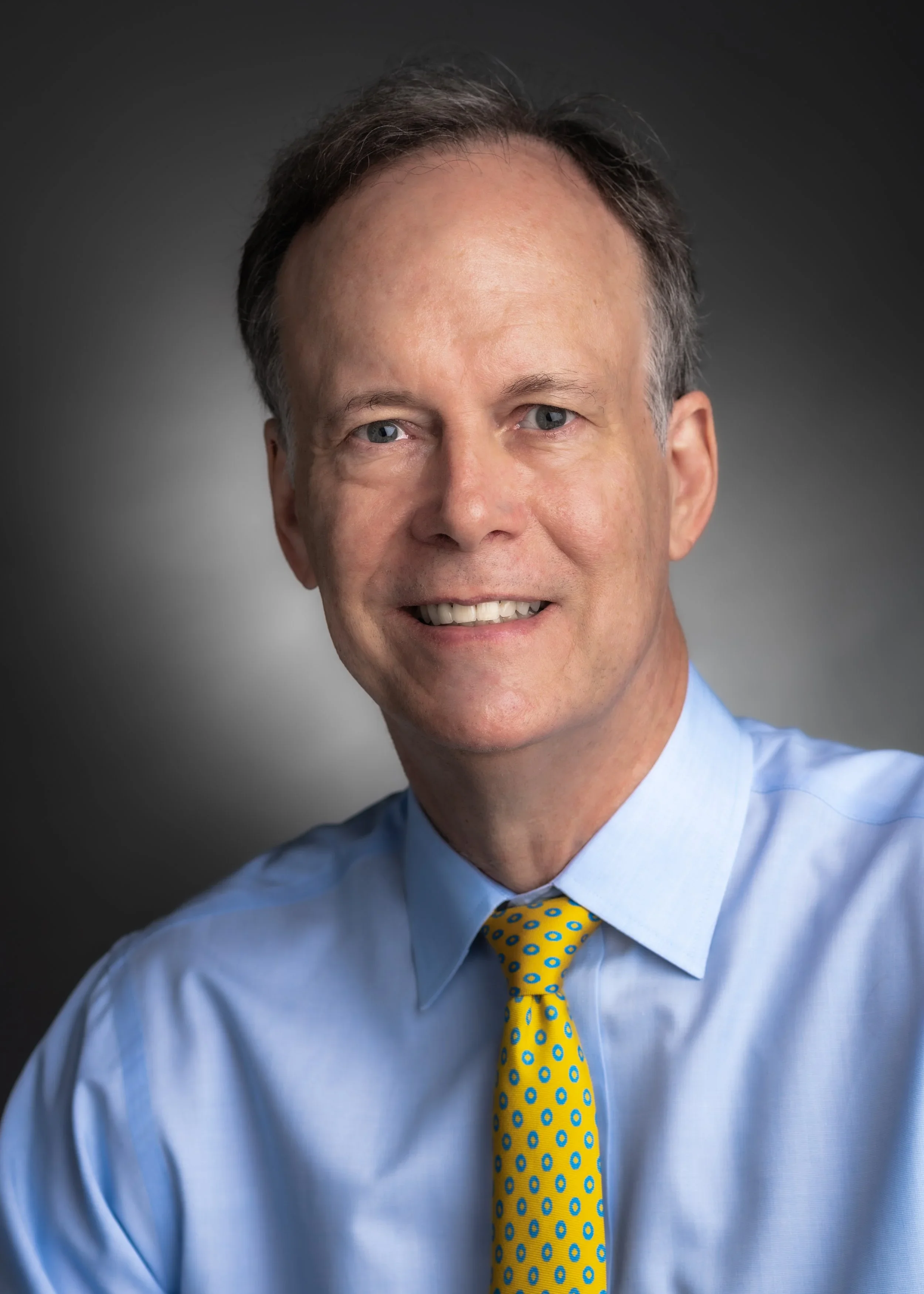
Putting together a care team in the middle of a health crisis is tricky business. Most of the time, you are not thinking clearly. That’s why it is so important to have someone in your life who can help you lift this heavy weight. Accepting the help and kindness of others is at the core of your well-being as you fight cancer. I’m blessed with a rock-solid marriage, plus family and friends who love me. Still, on the day of my diagnosis, I also had a powerful secret weapon: a brilliant physician-scientist at Dana-Farber Cancer Institute named William G. Kaelin, MD. The widower of my friend, Dr. Carolyn Kaelin, Bill won the Nobel Prize in medicine in 2019. If anyone could point us in the right direction, it was our trusted friend Bill.
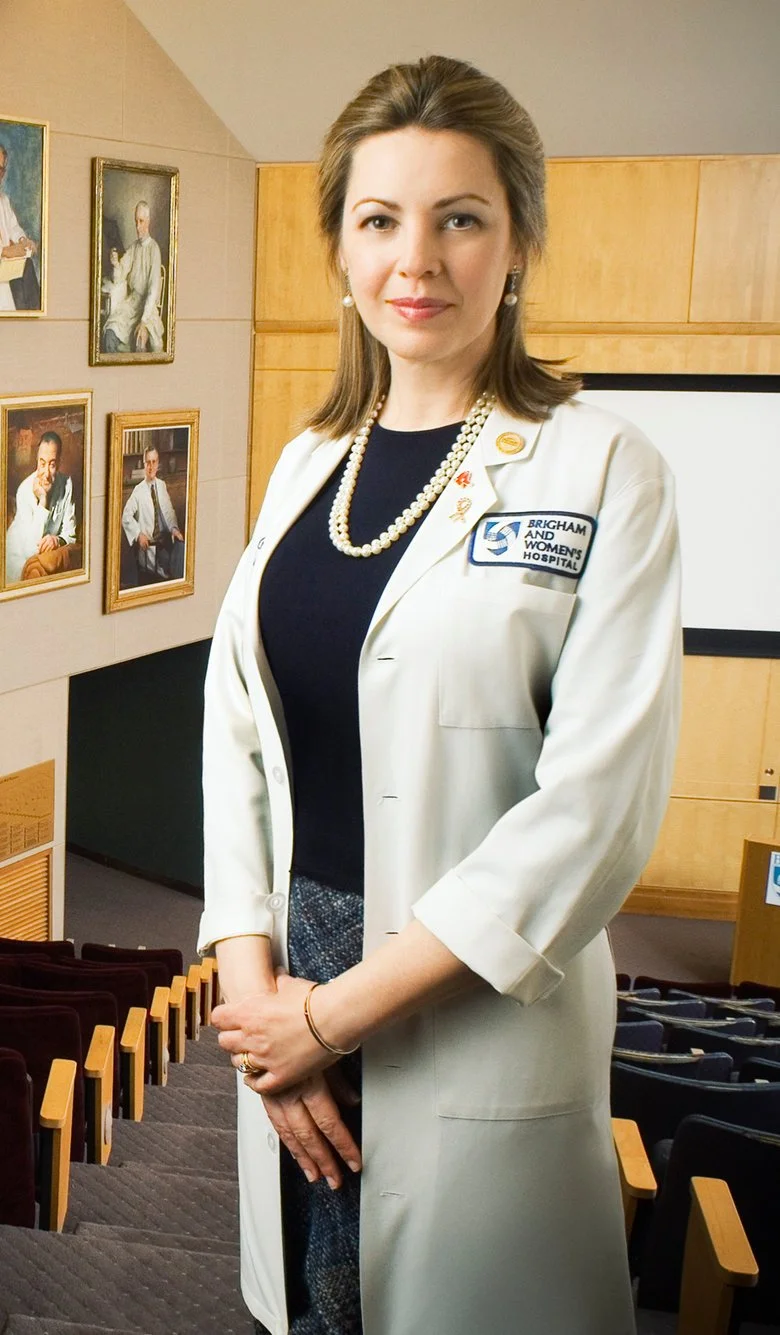
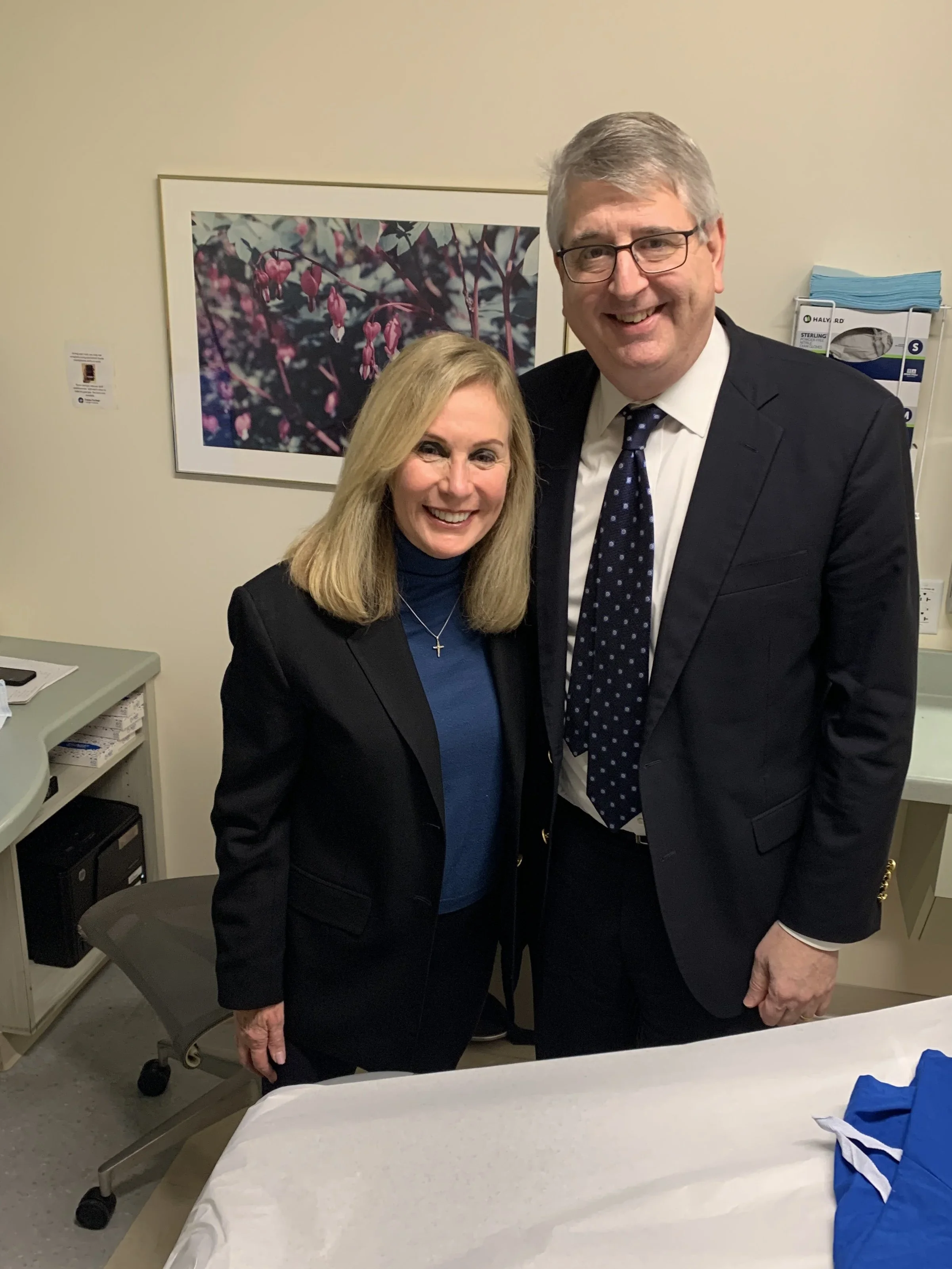
Bill highly recommended Dr. Esther Rhei as my surgeon, who had been trained and mentored by Carolyn Kaelin. Coincidence? I think not. This was a God moment. Known far and wide for her outstanding skills as a breast surgeon, Esther is associated with Mass General Brigham, Faulkner Hospital, and Dana-Farber Brigham Cancer Center. For my breast oncologist, Bill’s number one choice was his longtime friend and colleague, world-renowned breast cancer oncologist and champion for his patients, Dr. Hal Burstein.
Patient-Centered Care at its Best
Armed with the very best breast cancer doctors, it was time for me to make my appointments. That’s when the phone rang. On the other end was a warm female voice, welcoming me as a new patient to Dana-Farber. By the time the call ended, I had my appointments and experienced what Deb Toffler, Senior Care Director of Patient Care Services at Dana-Farber, calls the “special sauce.”
“Patient-centered care is at the core of it all,” Deb told me. “We believe that our patients are experts in their own experience. We want to get it right the first time.”
From the care coordinators who make that delicate first call to a newly diagnosed patient, to the valets who greet you and the physicians who treat you, Dana-Farber is in a league of its own with a seamless teamwork effort that flows between your breast surgeon, your oncologist, and your radiologist. Mental health professionals are huge assets to these teams, supporting the mind-body connection during cancer treatment and after. Given my trauma around my mother’s death, I did not hesitate to ask for mental health support. To be a patient at Dana-Farber Cancer Institute is to be heard, understood, and valued during the most difficult time of your life.
Lumpectomy or Mastectomy?
When I think back to my first visit with Dr. Rhei, I remember her confidence, her obvious competence, and most of all, how she made me feel. Esther didn’t just talk, she listened. It was clear to me that she loves what she does and is committed to her patients. As she reviewed my biopsy results and examined me, I held my breath, hoping that I would be a candidate for a lumpectomy instead of a mastectomy. Esther explained that for a patient like me with a slow-growing cancer caught early through mammography, estrogen and progesterone positive, and HER2 negative hormone status, a lumpectomy was her strong preference. She said that studies have shown there is no difference in mortality rates between a lumpectomy and a mastectomy for patients without metastatic breast cancer. The prevailing attitude for surgeons in cases like mine is, “Less is more.” Doctors can do less surgically and have the same survival rates, conserving a woman’s breast and sparing her the physical and emotional experience of a mastectomy.
In other words, this is not your mother’s breast cancer.
“We used to think that breast cancer was a systemic disease,” Dr. Rhei told me. “This was before mammography started being used as an effective tool for early intervention. Before mammography, we were treating more advanced cases of undetected breast cancer and mastectomy was the rule.”
About three weeks later, it was time for my lumpectomy. Performed at Mass General Brigham in Boston, the day began early on December 15 at the Lee Bell Breast Center with a procedure called Breast Seed Localization. A tiny, radioactive seed was placed inside my right breast using the same entry site as my biopsy.
This radioactive seed would also light Dr. Rhei’s way during my surgery, guiding her to the exact location of my small tumor. Once the seed was inserted, it was time to prepare for my outpatient surgery, which was expected to last about 3 hours. In addition to the removal of the tumor, a blue dye would be used that would flow through my lymph nodes. If the nodes lighted up blue, they would be removed and sent to the lab for further analysis. With Tom and Colleen by my side and the nurses adding a drug called Versed to my IV (aka “happy juice”) to help me relax, Esther led the way to the operating room. To be honest, I don’t remember anything else!
Here’s a funny story: A few hours after I left the recovery room, Tom and Colleen came to see me. Like the loving husband he is, Tom said: “Baby, you look great,” but Colleen was concerned: “Excuse me, but am I the only one who notices that my mother is blue?” Evidently, the blue dye travels through your system, giving a blue pallor to your skin, the whites of your eyes, and even your urine, which stays bright blue for days. Blue has always been my favorite color.
The Waiting Game
One of the most difficult parts of a breast cancer diagnosis for me was the waiting game. From the abnormal mammography results to the ultrasounds, biopsies, surgery, and pathology tests, fear filled my head. My life was suspended in time. I call this anxiety “the worry wheel.” Round and round it goes, showing me images of all the things that could go wrong. I did my best to rest and recover following my lumpectomy, but I was hyper-focused on the results of the pathology. On the day after Christmas, we received the greatest gift of all: Clean margins outside the tumor and no cancer in any of the lymph nodes.
This was great news, but the waiting game was not over. The tumor would be sent to a lab for further examination in what is known as an Oncotype DX Breast Recurrence Score. I asked Dr. Hal Burstein to explain the importance of this revolutionary test in the treatment of breast cancer.
“Prior to the use of the Oncotype DX Breast Recurrence Score test, we end up giving chemotherapy to nearly all women with early-stage breast cancer,” he explained. “This test allows us to understand which women really need chemotherapy and which do not. It has shown us that 60+% of patients might be able to avoid chemotherapy without compromising their outcomes, allowing us to individualize treatment in a way we did not have before.”
To avoid chemotherapy, he told me, I needed a score that was less than 25. Miracle of miracles, my Oncotype DX score was 12. Tom and I finally felt like we could breathe. At this point, Dr. Burstein recommended genetic testing, not only to see if I carried the BRCA gene but to find out once and for all, as an adopted child, what my genetic profile was. We met with a Dana-Farber genetic counselor and the blood was drawn. About a week later, the results were in: I did not carry the BRCA gene and tested
negative for 48 other types of mutations that might lead to cancer. With this news, my entire family breathed a sigh of relief. It was time to move on to radiation.
Choosing a Radiation Oncologist
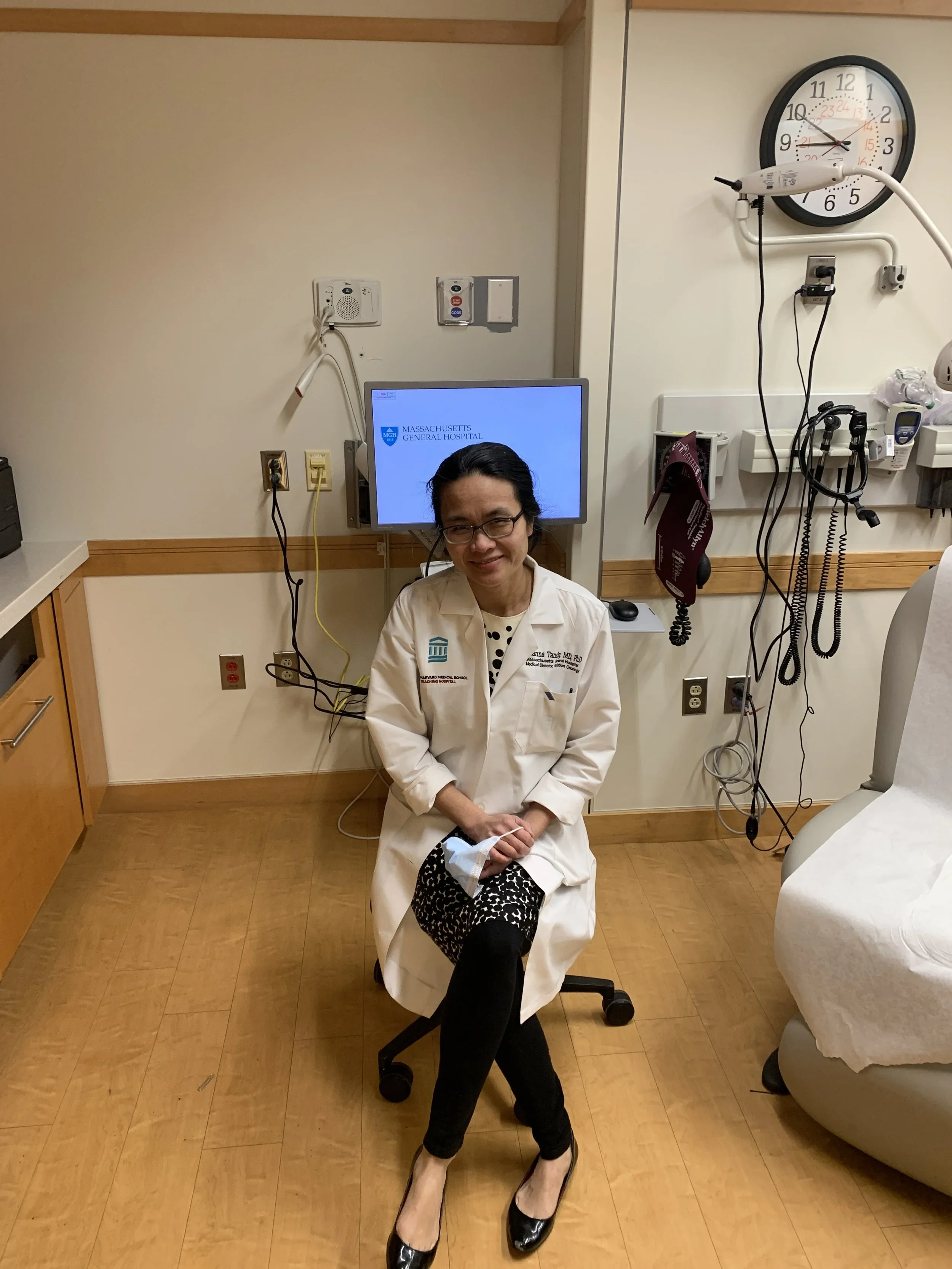
Choosing the right radiation oncologist is a bigger deal than you might think. Like the athlete in a relay who hands the baton to the next runner, Dr. Burstein carefully chose Dr. Joanna Tansky to take over this chapter in my cancer care. The Medical Director of Radiation Oncology at Newton Wellesley Hospital, Mass General Cancer Center, Joanna and her team of nurses and radiation therapists turned out to be the perfect fit for me. After reviewing my imaging, overall health, pathology reports, including what type of breast cancer I had, the surgical margins of my tumor, and HER2 negative, estrogen and progesterone positive status, Joanna met with me privately so she could get to know me. She prescribed 16 radiation treatments throughout four weeks with weekends off. When I asked her how she determines how many treatments a woman will need, she told me that, in many cases, it’s logistics. Doctors tailor treatment plans for patients who travel from far away and are sometimes dealing with financial hardship and other disparities because “this medical decision can’t bankrupt them.”
The team of women who cared for me during my radiation treatments was exceptional. Laying on a narrow table below a gigantic machine that beams powerful but invisible radiation into your breast while your arms are over your head and your breast is exposed is beyond humbling. I’m a modest person and have never felt more vulnerable. Radiation doesn’t take a long time. Mine was about 40 seconds per treatment and it didn’t hurt. However, radiation is cumulative inside the tissue and the nurses watch carefully for burns. I highly recommend two outstanding radiation creams: Dr. C. Tuna’s Calendula and Jeans Cream. Don’t skimp when you are applying these creams multiple times a day. After every radiation treatment, I would slather one of these super creams over my breast and underarm. I even got up in the middle of the night for another application. The loving hearts and hands of Dr. Tansky and her team guided me toward the finish line with so much compassion. Kindness is their middle name. When I asked Joanna why she does what she does, her answer touched me deeply.
“It is humbling to take care of patients and to be part of their families during the most challenging time of their lives,” she said. “My greatest hope is that someday, there will be a cure for cancer. I’ll hang a sign on my door that says ‘Gone fishing.’”
Hot Flashes, Anyone?
Breast cancer cells need hormones to grow, and that is why hormone-suppressant drugs like Tamoxifen are prescribed. Originally introduced in 1978 and approved for wider use in 1998 by the FDA, Tamoxifen blocks estrogen activity in the breast by attaching to the hormone receptors in cancer cells. This is the final step in my treatment plan, and I’ll need to take this drug for five years. Tamoxifen and other options like aromatase inhibitors are full of side effects, including nausea, hot flashes, weight gain, and hair loss. Like millions of breast cancer survivors worldwide, I’m just putting one foot in front of the other, walking in faith.
Where Do We Go from Here?
One of the many ways Carolyn Kaelin continues to be my friend, even beyond her passing, is through her husband, Bill. When you have a friend who just happens to be a Nobel Prize-winning physician-scientist, you get to ask him the million-dollar question: “How close are we to a cure for cancer?” Bill’s answer is profound.
“I can imagine ‘cure’ taking different forms,” he answers. “While we would all like a treatment that would eliminate every last cancer cell once and for all, this bar might be unnecessarily high, especially if attaining it causes significant toxicity. Perhaps the goal should be to reduce the number of cancer cells, and tame the remainder, to the point where they no longer cause symptoms and no longer shorten a patient’s life. And certainly, it would be great if we could prevent cancer altogether! For some cancers, that dream is becoming a reality. You and I know painfully well that the cure for cancer can’t come fast enough.”
Survivorship Is Hard
Breast cancer doesn’t end when your treatments are over. Like the relative who can’t take the hint and stays too long after the party, breast cancer just hangs around. The cancer cells may be gone, but the scars are there to remind you that you are not the same person you used to be. Dave Bullis, PhD and Director of Ambulatory Behavioral Medicine at Mass General Cancer Center at Newton Wellesley, has played a key role in helping me maintain my mental health. While I’m still in the beginning stages of survivorship (and I’m so fortunate to be one), I’m keenly aware of something new: there’s a soundtrack playing in my head. Humming along, somewhere in the background, I hear a cautious, frightened voice warning me that my body made cancer cells once and it can do it again. What I’ve lost, according to Dave, is “benign innocence,” which is best described as the calmer, more carefree way it used to feel before cancer came into my life. The door to that innocence is closed to me now, and the only people who understand how this feels are other cancer survivors.
But maybe this is the new me: “Candy O 2.0.” If you can’t go back, you must move forward or be stuck somewhere between. Breast cancer has aged me in body and mind, but I’ve also arrived at a beautiful new place I’ve never been before, and it is filled with love. The hundreds of breast cancer survivors I’ve interviewed throughout my career have now taken me under their wings. The many breast cancer non-profits I have helped to raise money for research, advocacy, and a cure have reached out to me with arms wide open. Family, friends, colleagues, and fans have given me hope and lifted me up.
Throughout my life, this has been my mantra: You get what you give. If you throw good things out into the world, they will return to you.
This road I’m on is long and winding, but I am not alone. Everywhere I look, women are at my side, showing me the way. I’m eternally grateful for the lessons they teach me and the love these women give me.