Beth Lane is Unbroken
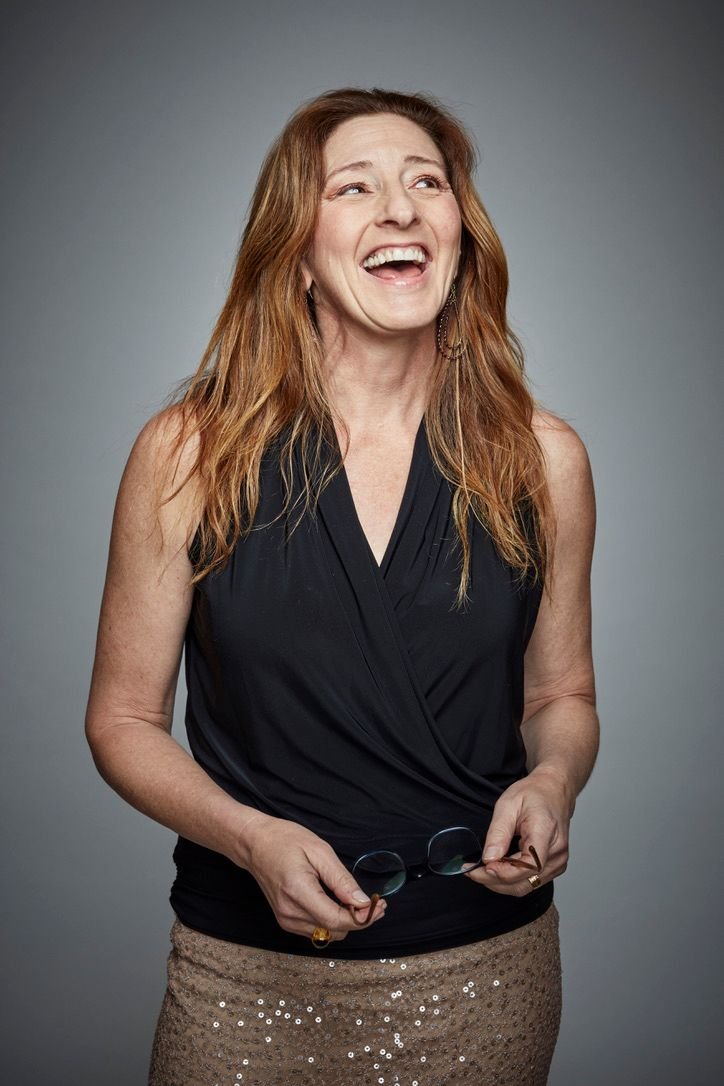
Photo: Chad Batka
Two-thirds of Millennials aren’t familiar with the Holocaust. They don’t fully understand the horrors that befell 11 million souls. That means Millennials also don’t know the stories of human bravery. Like the story of the Schmidts, who Director Beth Lane knows the story and how this German couple risked their lives to save her mother and her siblings from the Nazis. This is their story, and her by heritage.
Our conversation starts here:
How did you discover this family? Let me back up and ask first: Did you know your mother was adopted as a young girl?
I remember the moment that I learned that my mom was adopted. I was 6 years old. I don’t have any recollection, really, of when she told me she had survived the Holocaust; she never really used those words. She never used the word “survivor.” She’s never used the word “victim.” You know, any of the more traditional expectations you might have of how somebody would describe their childhood or their history—those words never came out of my mom’s mouth.
I think, at the time, it wasn’t so much a—-and I can’t speak for her-—a deflection, but more that she had moved on with her life. She had come to this country as an immigrant, as a refugee. Her mother had been murdered at Auschwitz. Her father was unable to leave Germany. She came to the U.S. with 6 siblings, and they were all placed in foster homes around the south side of Chicago. They were separated, which is quite harrowing, considering that they had survived all of this together, only to come to America to then be separated. She was adopted by my grandparents, Joshua and Rosalynd Speigel, and was given an extraordinary life, something that, like, you can’t even imagine coming from war-torn Europe, in Germany in particular, to [this] life. Her mother was a painter, artist, sculptor, a fabulous cook, an entertainer, a former jazz singer, and a milliner. And her father, my Grandpa Josh, was a neurosurgeon and became chief of neurosurgery at Michael Reese Hospital, and then became the president of the Neurological Society of America.
She went from poverty-stricken Germany to my grandparents’ home. They provided her with an education, comfort, love. There’s love in terms of protection and hiding, and then there is love when you’re not hiding. And when you’re taking your kids to the park to fly kites, and you’re giving them dogs to play with, and providing ballet lessons. So my mother had been brought up to move forward, and my grandparents had always said to her, “If you ever want to know about your family, ask us.”
She always knew that she was adopted. She was adopted at age 6. She was given the choice to be adopted. How do you even answer that question? She didn’t really know what it adoption was. My mom’s older siblings had to go through the refugee sponsorship process with the Jewish Children’s Bureau of Chicago, only to then go through the process of contacting my mom’s biological father in Germany, getting his signature to legally permit her to be adopted. Then they had to post it in a newspaper. So she always knew it, but my mother will tell you that she always felt a tremendous allegiance and loyalty to her adoptive parents, really the only parents that she ever knew. Just the sense of loyalty and obligation to always be grateful and never ruffle any feathers. She came from a country where the government wanted her dead, so she learned to follow the fold and make no alarmist sounds. She never complained about it.
I would say the first time I really started to dabble with the creative process around her in my late 20s or early 30s. I tried writing a one-person play to explore and examine my mom’s birth mother, Lina Banda, who was an extraordinary activist for somebody who came from the shtetl in Hungary and married a man who brought her to Germany. And, they still lived in relative poverty; they were always on welfare. She was the janitress of her building; that’s how they paid their rent. Lina was a person who darned socks, but then would move people through Berlin. She would go to Cologne, pick people up, and bring them to Berlin to help them secure passports to get out of Germany. So, she was one of these silent, underground people doing things that were illegal in Germany. Just being Jewish was illegal. She was remarkable. I wish I had more information to share about Lina, about that specific part of the story, but none of us has any documentation. We just have stories from my aunts and uncle.
When I wrote that play, it just didn’t really land. It was therapeutic for me and not so much for the audience. So you put it in a drawer. I pulled it out again in 2015. I had enrolled at UCLA School of Theater, Film, and Television to get my Master’s degree in Theater.
One of my first assignments was to write a play. So I took that one-person play and made it into a broader play with 8 characters. It felt self-serving again; it didn’t feel like it had any traction. However, in the summer between my second and third year, my mom decided to go back to Germany for the first time. She decided after the death of my uncle Alfons, her brother, who had akso written a 40-page document about the family history.
So my dad, my sister, my mom, and I went with her. We went to the town of Worin where she and her siblings had been hidden. We were hosted by the town historians. And they had a surprise for us: They invited the grandson of the farmers who hid mom and her siblings to come and meet us.
This was one of those watershed moments that any filmmaker would just kill for. And I literally looked to my left, looked to my right and said, “Where is the film crew? This is unbelievable!” This guy, the grandson of the couple who saved my family, was my brother’s age. It provided for me the reverse shot of the story.
It was no longer the Weber family point of view, it was the Schmidt family point of view. I think seeing an ancestor, meeting an ancestor, brought it home. I can’t describe the sensation, the feeling. I know for myself that, theoretically, had it not been for the Schmidts, I wouldn’t be alive today. My kids wouldn’t be alive if it weren't for the Schmidts.
“If the Schmidts had been caught, it’s very likely that they would’ve been killed. It just depends on which soldier caught them and how it went down. So it’s also very possible that this grandson might never have been born. In that moment, I said, “I am going to make a movie about this.” ”
I never felt this story was mine to tell. It is my mother’s story and my aunts, and they just weren’t going to tell it. I respected their choices. But in that moment I said, “That’s it. This is now my story, too. I have to take ownership of this, because these are remarkable people who need to be honored and celebrated.”
“With what’s going on in the world, it’s extraordinary to me that 3 weeks after we came back from that experience and meeting Arthur Schmidt III, the Charlottesville riot happened. My mom and I talked a lot about that. This is really kind of happening all over again. That was 2017, and now we’re in 2022, and I am somebody who no longer says that anti-Semitism is on the rise. It’s not on the rise, it’s here. It’s a fixture. It’s real, and it’s dangerous. It’s probably always been here, just kind of hiding underneath the floorboards. ”
I’m so happy to say that Roberta Kaplan and her team, the legal experts, who are part of the platform of Integrity First for America, just won the first lawsuit against the perpetrators of Charlottesville. She is bankrupting them. It’s fantastic. The legal fees they’ve had to pay and the damages they now have to pay. I think it’s in the ballpark of $25 million. The only way to really try to address this is to cripple these people financially. The same thing happened with Sandy Hook, with Remington. They’re going in at the financial level. It’s the only way that we can really combat these small entities from being able to galvanize these large troops of people to come in and do this kind of terrible, horrible, vitriolic hate.
That’s how I came about this story. I was enrolled at UCLA. I ran back to campus after that trip and experience and said, “I’m a theater student but you guys got to teach me how to make a movie! You have to teach me how to make a documentary! And my first film shoot is in March because Yad Vashem is honoring Arthur and Paula Schmidt in the Gardens of the Righteous, and I have to be ready to roll!”
In 2008, my dad and his wife took my brother and sister, my mom, and all the grandchildren to Israel. We went to Yad Vashem, the World Holocaust Remembrance Center, and my mother and I decided to look up her biological mother’s name in the archives there. We learned about the Garden of the Righteous Among the Nations. My mom communicated with my uncle Alfons, who created the dossier. He’s really the one who created the application, which is a very long and tedious process, to accumulate the proof that somebody should be honored in this garden. The Garden of the Righteous is specifically for gentiles who helped Jews during the Holocaust. The honor was finally bestowed upon the Schmidts in 2015.
Did the Schmidt’s grandson, Herr Schmidt, know that his grandparents did this?
It was a surprise to him, that’s honestly what made me do this. I’m in this farmland meeting this guy, we’re blown away, and saying goodbye, and he told me a story. This story is personal to him, so I’m not going to share it here. But he told me this story that revealed him to be an extraordinary pacifist. And I asked him, “How did you have the courage to be that kind of a pacifist? It takes a lot to actually be a pacifist.” Not a bystander, he wasn’t a bystander, he was a pacifist. And I asked him, “Was it because of what your grandfather did, that was taught in your family? Is that how you became such an extraordinarily courageous person?” He said he never knew the story about his grandfather. He said he’s quite sure his father never knew the story about his grandfather, and that the first time he ever learned even a shred of this was when he got a letter in the mail from Yad Vashem.
Can you imagine opening up a letter and learning this about your ancestors? I don’t know what the communication was between Yad Vashem and Herr Schmidt, but I think he was quite thrilled and elated. He joined us in Jerusalem and received the honor on behalf of his family. He is a very special person. It’s very important to him that people understand he is not the hero, but he’s accepting it posthumously on behalf of his grandfather. He’s very humble.
The Garden of the Righteous is a very special place, particularly for German citizens to be honored. There are over 27,000 names engraved on the granite walls. But Arthur and Paula Schmidt were the 600th German names. So of 27,000 people, 600 names is pretty small and I couldn’t help but wonder why there are so few German names on those walls? I have a couple ideas as to why, but I’m no expert.
“I think there were a lot of bystanders. But secondly, I also think that a lot of people like the Schmidts, were killed if they were caught. I’d like to think that there are more people like the Schmidts. That’s my hope for humanity.”
Let’s be real, there were more people who were bystanders than were silent heroes, there’s no question about that. Who knows why people don’t share these things? I think true heroes don’t talk about their heroism.
We look at our firefighters, look at our front line workers, the people that are protecting and serving us today in Covid; they’re not running around saying, “I treated 50 patients today!” They’re doing their job. I like to believe that Arthur and Paula Schmidt were doing their job. They were being human. They were being people and treating others the way they would want to be treated. That’s our job as human beings: to be human.
When I was filming in Worin, I went back with my film crew a couple of years later, and there was a woman who took me aside—she spoke no English, and I spoke no German—and she handed me a picture. I get the chills, I get goosebumps even just thinking about that moment again. She handed me this picture of the Schmidts. Our family has only ever had 2 photos of the Schmits over the years, and now to have a third photo was amazing! And I asked my translator to please ask her, “Did she ever know the Schmidts?” She had met them. “Did they ever talk about the story?” No, they never talked about the story. However, she said, “ My mother says that she seemed like the kind of person who would’ve done the humanitarian thing.” And clearly there were conversations, I think, once they found out what had happened.
We spent three days in Worin, and one of the days my mother had asked me to please install some plaques that read: This is the site where Arthur and Paula Schmidt hid seven Jewish siblings. We did that at the farm but then we also felt we should be honoring the town, because people knew that these kids were being hidden. Worin is a postage-stamp-sized town, a rural little dot you drive by and easily miss. But the people in that town knew about the siblings and nobody turned them in.
So we made other plaques that went in the little town center, where they have a museum that shows things from the wheat mill and different tractors. It’s a really charming museum. But the plaque acknowledges Arthur and Paula Schmidt, but also the mayor, a member of the SS, who knew about the kids. He brought food to the kids, and he never turned them in. So it was our opportunity to really thank the town of Worin and to give the people of that town some ownership of our history and to know that they were benevolent and humanitarian.
When you were doing your man-on-the-street question: “Would You Hide Me?” What were your discoveries?
It is a very interesting question and the question didn’t even begin that way. When I was talking with Arthur Schmidt III he was telling me the story, and I started thinking about bravery and courage. I said, “Is that something that is inherited, or can you learn it?” So initially, that was my question. And the more I asked that question, the more I realized it wasn't the right question for a couple of reasons. Number one, it kind of smelled of eugenics, which is exactly what the Nazis were doing and saying: your bloodline is who you are, and we don’t like your bloodlines. So, I felt that I needed to really reformulate the question, and whether it’s inherited or learned doesn’t matter nearly as much as “what would you do?” just plain and simple. So the answers that came out; there’s a lot of deflection.
A lot of people would say “too heavy a question, we’re not in the circumstance.” Someone said, “I know too much history, I can’t answer that question.” Some would jump right in and say, “Of course! Absolutely!” I wish that I had that CIA knowledge of how to tell if somebody really meant it! I think that the most honest answers were the people who answered, “I don’t know what I would do.” We would like to think that we would. I would like to think that I would.
What are the circumstances? Is my child standing right next to me and I have to hide somebody else at the risk of my own child’s life? Am I alone and it’s easier to do it? Who knows? Who knows? The question for me really came from me having panic attacks when my housekeeper here in Los Angeles wouldn’t show up to work on time. She thought I was mad at her for not showing up to work on time, but I was like, “No! I’m panicked that you got picked up by ICE! What if I have to hide you and your kids?! Can you just text me that you’re going to be late? That’s all I care about.”
She started to cry and she gave me a hug. It was very touching. There was an interesting kind of snowball effect. One day, she had been working for us for so long, that there was one day I was just trying to get over to the airport and I was rushing around and said to her, “I don’t want to drive to the airport, can you please just drive me to the airport?” She just looked at me and said,“No! I can’t drive you to the airport!” and I was, like, wow, oh my gosh. I was so embarrassed. I wasn’t thinking about her life. And how much security is there and that she could so easily get picked up just for driving, you know? I was really embarrassed. I had taken that aspect of her life for granted. And that’s when I started to panic about ICE.
I asked my mom if she would hide somebody else at the risk of me?” and her answer was an automatic“No!” Here’s somebody who was hidden, but at the risk of my life and my brothers and my sisters. So that’s a very human response. So I don’t think that Arthur and Paula Schmidt thought about it. It wasn’t like they were having coffee one morning saying, “Should we hide the Weber kids?” It’s something that you just do.
There was a distinct moment when my mom realized she needed to reach out to her siblings. The after effects of war and trauma, everybody responds so differently, but many of my cousins will tell me they were absolutely petrified of my uncle Alfons. To me he’s like the biggest teddy bear, but they were just petrified of him. And after the reunion, after he was reunited with my mom, 40 years later, they said he was changed, that he softened and that he became more accessible. So I obviously never knew him when he was living what my cousins described as a very rigid life. I only ever knew him as somebody who was very, very warm and loving.
And so in many ways, losing my Uncle Alfons, there’s no question that it’s a big reason why my mom wanted to go back to Germany. And it’s a big reason why I felt like I must tell the story. He’s important to me and I want his memory to live on in this one wonderful light.
Why is it so important to continue to tell this story?
“There’s a Jewish tenet l’dor v’dor “from generation to generation,” part of being Jewish is passing stories down from one generation to another. We do it through song, through chanting, through prayer. It’s no surprise to me that I’m an actor and that I am a storyteller. I have always loved being told stories, I love experiencing stories. There is something about being in the room with other people who are telling a story in real time that is so rewarding. It makes me feel connected to other human beings. ”
You know, for me, part of my contribution l’dor v’dor is giving people the opportunity to practice the muscle of empathy and compassion. That’s a muscle that I think we don’t think enough about how to practice. We know how to practice piano skills. We know how to practice cooking. We know how to practice making a bed. There are lots of things that we know how to practice in life. We practice driving to get your driver’s license, or you teach your dog how to sit and stay.. How do you practice exercising compassion and empathy? I really do believe that it is something that we are taught and our elders model it for us. If you don’t have role models, then how can you practice? Love is a muscle, something that we work on. So that’s my goal with the film: to give people an opportunity to practice the muscles of compassion.
Visit BethLane.com.