Nina Coslov wants to talk menopause
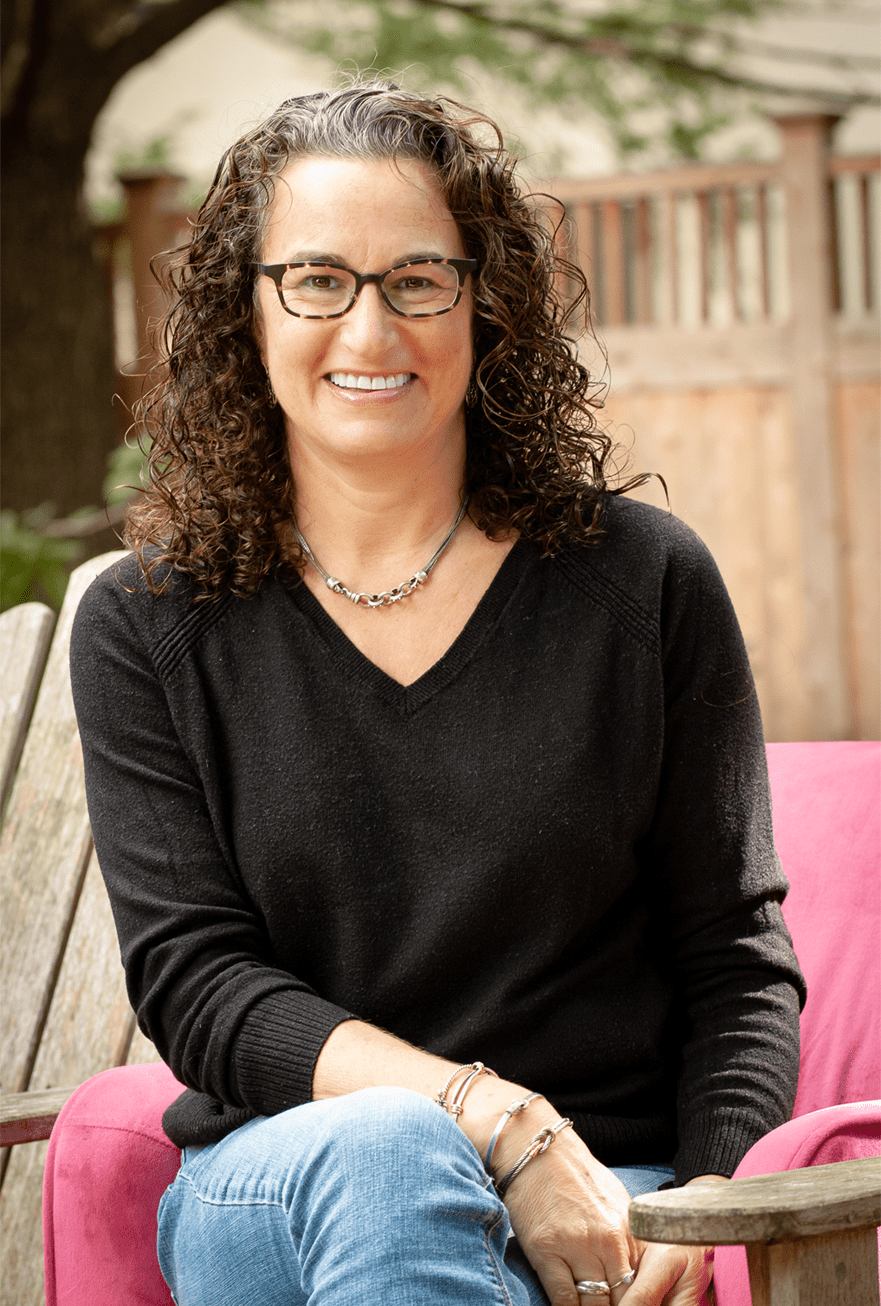
Photo: Bridget Ryan Snell
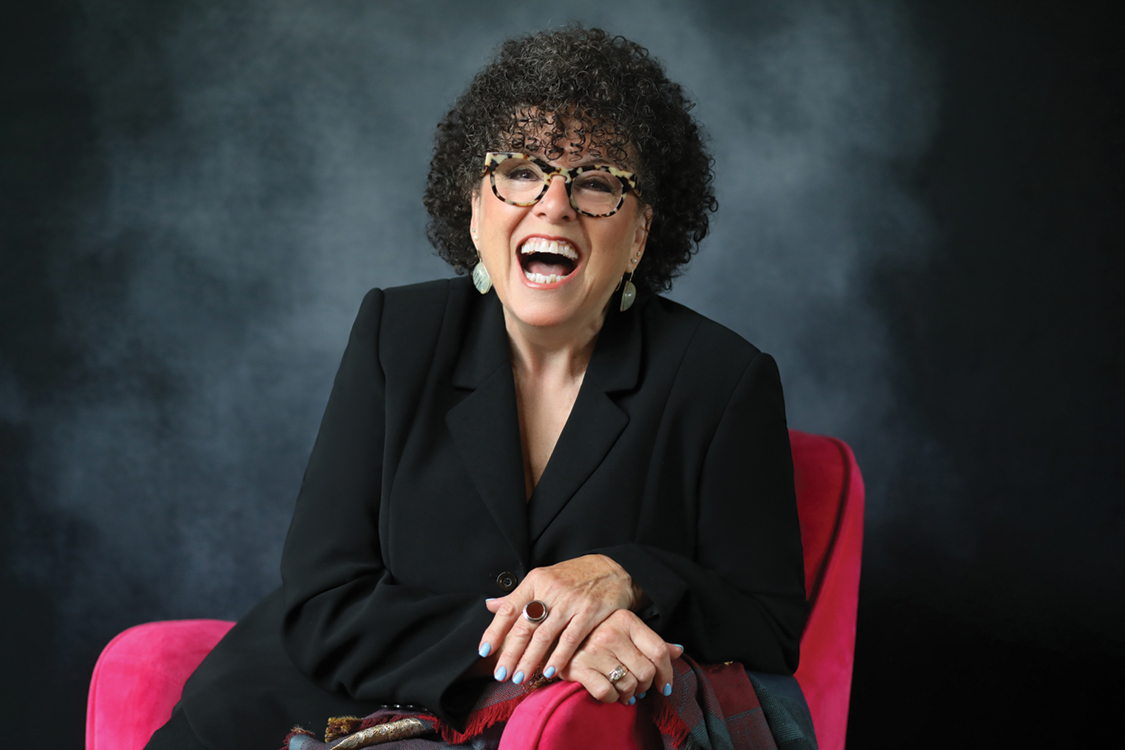
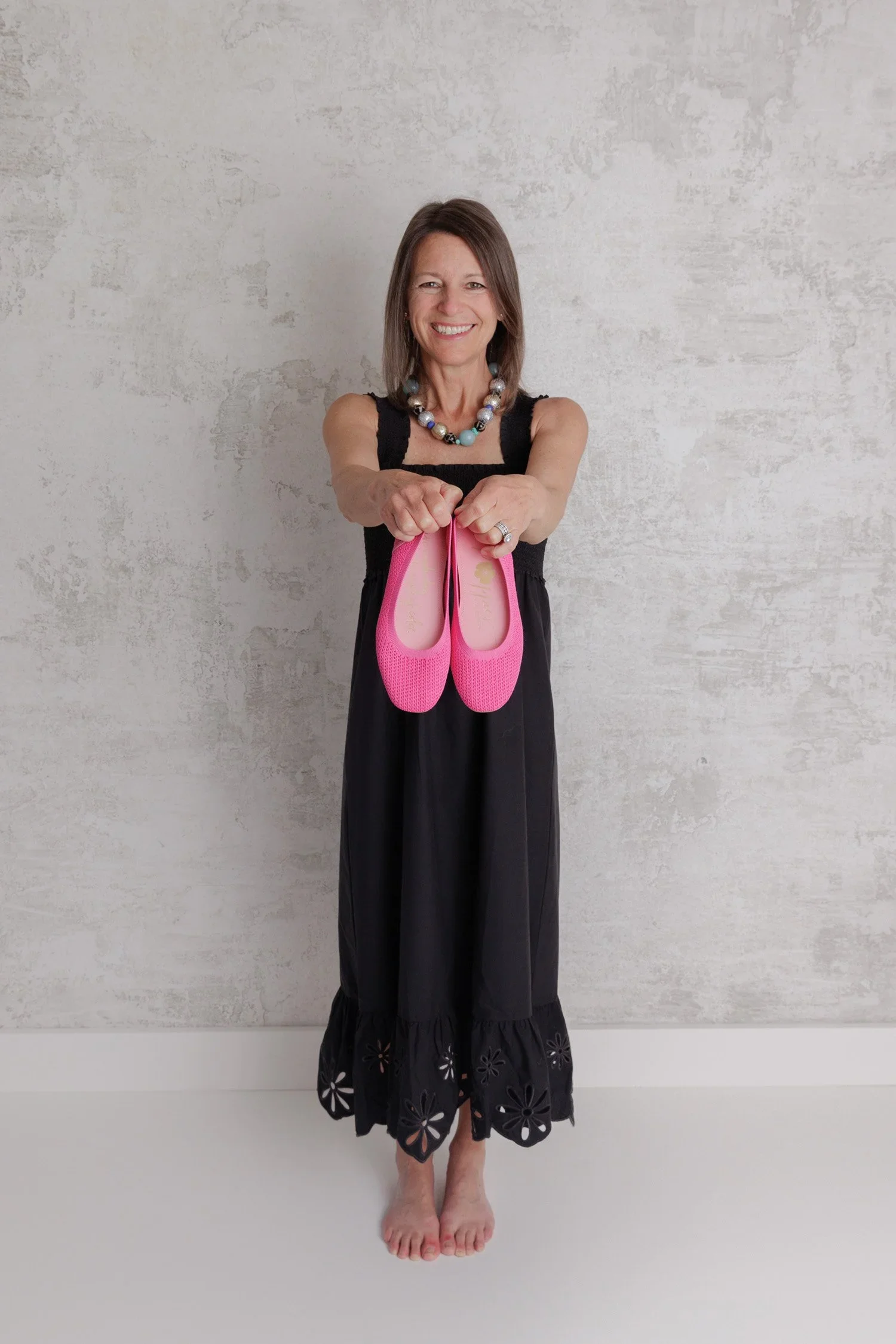
Data. That is all Nina Coslov wanted. Data to explain the changes in her body (was she experiencing the change?) Surprisingly, she found there wasn’t a lot of data about hormonal changes, perimenopause, or menopause. She recruited a friend and a few doctors to create Women Living Better. Their work is a portal to answers for thousands of women. Let’s say it together now: "Thank you, Nina!”
Our conversation begins here:
Can you tell us how you and your co-founder started Women Living Better? As a young woman, you felt a bit brushed off by doctors about symptoms you were experiencing, which you wondered could be related to menopause. Is that right?
I want to be a little careful about the “brushed off” by doctors because I think we have to step back and realize that sufficient research about perimenopause just has not been done. So most of our medical providers are doing the best they can with what they know. The lack of validation of our experiences—that’s happening. Whether we call it being “brushed off” or dismissed by health care providers, it really goes back to the fact that there isn’t ample research to create a basis for medical education, to have them know that women could be starting this process while their periods are still coming monthly, nor about the very broad range of symptoms that can occur. I think once you’ve skipped a period or have an irregular period, then healthcare providers will look at what you’re sharing and say, okay, this sounds like you might be in the menopausal transition.
So yes, that was the situation for me. I was about 43 or 42 and the first thing that happened to me was I just stopped sleeping through the night. I’d fall asleep, but I’d wake up around 2 a.m. I joke that it was predictably somewhere between 2:08 and 2:11 a.m., and that went on for a long time. I would be very awake. It wasn’t just like I’d wake up and get back to sleep easily or go to the bathroom and go back to sleep easily. I had a revving feeling; I had a lot of energy. And so I was awake for long periods. That led to some sleep deprivation. I had three young children at the time, and it just seemed like something had sort of shifted for me, physiologically. Nothing else in my life had changed. And so that was puzzling to me. Then I’d say maybe 3 or 4 months after that I noticed a feeling of fragility. I remember thinking, “This isn’t me. I don’t feel like myself.” I was worrying about things I hadn’t before. I think we tend to put these feelings in a kind of general anxiety bucket, but it wasn’t typical anxiety. I did not feel a sense of doom,;my heart wasn’t pounding. I wasn’t sweating. I just felt less able to cope with things.
A really cool thing about creating Women Living Better is that it helped me know that my experience was normal. Even the words others shared on the site about their experiences,helped me better explain what I was experiencing. Women Living Better offers information about hormonal pattern changes in perimenopause and what those changes can lead to (i.e. what symptoms can arise). And we have polls and open-ended questions for women to share their experiences and questions about perimenopause. For example, women’s descriptions of feeling less able to cope were:
“I feel like I can’t calm down on the inside.”
“I feel like my fight or flight response is more sensitive.”
“I startle more easily.”
And those descriptors totally resonated with me.
I mentioned these experiences of sleep disruption and what I’ll call a new and “not-like-me-fragility” to both my primary care doctor and my OBGYN. I had done some digging in PubMed to see if I could find something to explain my experience, and there wasn’t much, but there was a little about hormonal changes. So, I asked both providers if it could be perimenopause, but they asked, “Are you still getting a monthly period?” And I said I was. They said, “Well, then this is not perimenopause.”
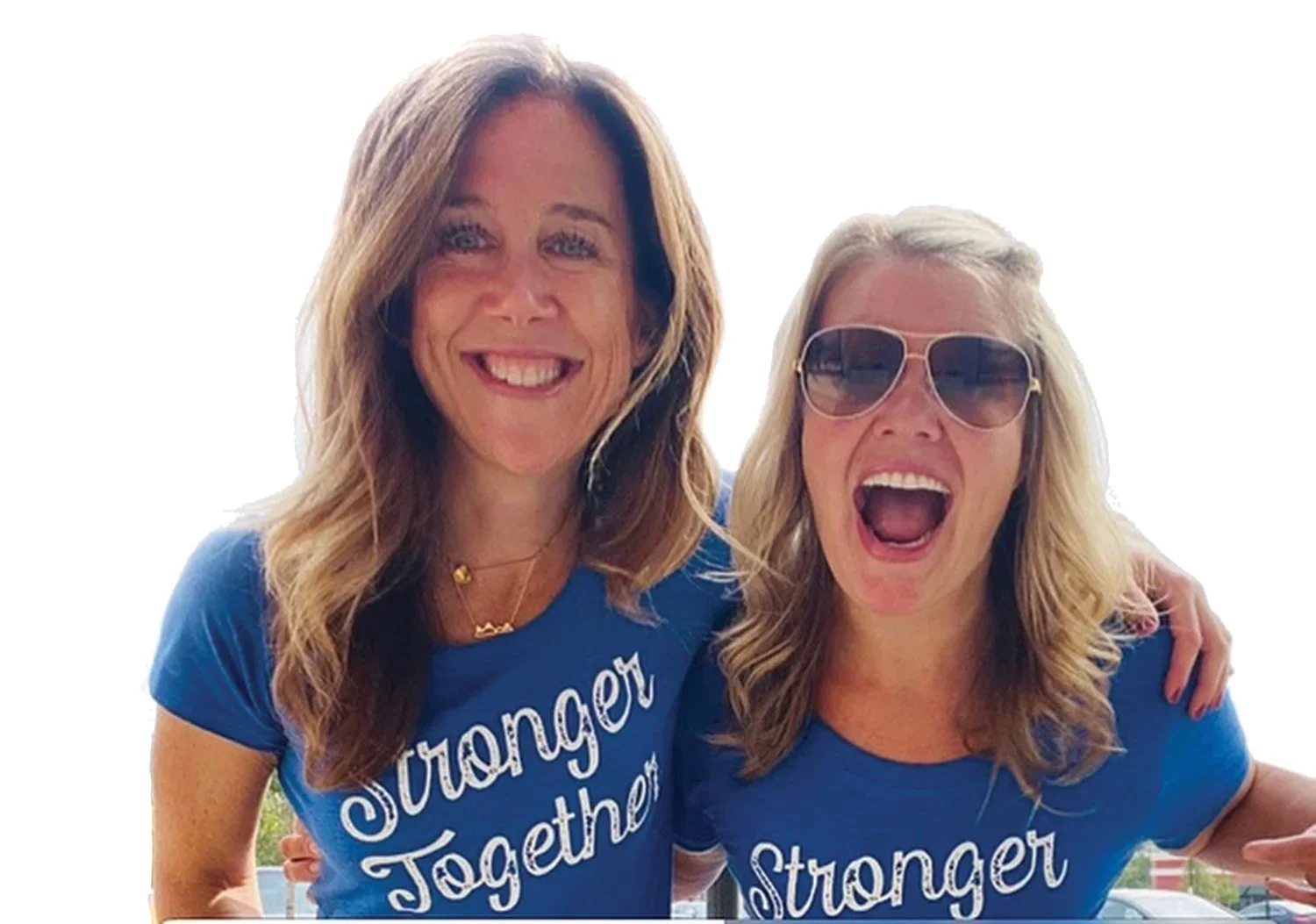
My primary care physician offered me something for sleep and something for anxiety. And I left thinking, this doesn’t make sense to me. My gut said there’s something else going on. I was telling all of this to my good friend, Jo, and learned she was having a similar experience. She was still getting a monthly period but was experiencing new irritability, and she is a very calm person. She said the irritability was sudden, out of the blue, and not like her. So I talked her into looking into this with me, and that’s how Women Living Better started.
In the process of trying to understand our own experiences, we learned so much even about our normal menstrual cycles that we didn’t know. And we thought, gosh, our bodies have been doing this our whole menstruating lives, why do we not know this? We started connecting with experts who were interested in our idea that symptoms may start for some before noticeably irregular cycles and changing periods.
Our initial survey in 2016 asked women about the gap in knowledge about perimenopause and menopause. We asked people, 35 to 80 years old, about their cycle status, what they knew about perimenopause, what they wished they knew, and so on. We got a flood of responses. Within 3 weeks, we had 400 surveys. And we had open-ended questions where people were writing and writing. And so we were like, “Wow, we have hit on something here. We’ve got to do something about this.”
The first thing we did was create the website with the information about what we had learned. Women Living Better is the resource that we wish we had found. The site is evidence-based, and cites and explains the relevant research in accessible language. Some people ask, “Can’t you just give me 3 bullets about what to do?” I can’t. Perimenopause is complicated. It’s different for each of us. And because we’re in a transition from a reproductive to a nonreproductive state, things are changing all the time. It helps to be aware of what’s happening in your body and be willing to tweak what you are doing to feel better over time. I like to say that Women Living Better is a kind of do-it-yourself, explore-for-yourself, educate-yourself resource.
It’s so interesting because, as early as health class in high school, we were told that the menstrual cycle is all about bleeding. Right? Even though we know that hormones are involved, it’s always about bleeding.
It’s a good point. So much is focused on bleeding, but there is so much more to know. Two key learnings for me, that when taken together, form an “Aha!” moment: First, we have hormone receptors, estrogen, and progesterone receptors all over our bodies. They are in our skin, our eyes, our brains. Everywhere. We created an image of this on the site, Hormone Woman. It drives the point home. Second, a wonderful study from 1997 looked at hormone levels in a perimenopausal woman’s urine daily for six months (A graph of this illustrates the considerable fluctuations in hormones). This ‘97 study was the first to challenge the narrative that estrogen declines during perimenopause. In many people, estrogen does not decline during perimenopause but actually rises higher and fluctuates more than it had previously. When you couple these fluctuations with the fact that there are estrogen and progesterone receptors all over our bodies, you start to see why perimenopause can be a really tricky time.
Now that you are educating a woman about her own body, the things she didn’t know she needed to know, how is this affecting the practice of medicine? How are the doctors taking this information?
That’s a good question. I mean, I hope that most healthcare providers are glad when someone comes in with more knowledge about what’s happening to them, their hypotheses about why it’s happening, and what things they are interested in trying to feel better.
We are the experts on our bodies. We need to know that. I wouldn’t be comfortable with a health care provider who isn’t willing to discuss a path forward. They are the experts on these options nd have a knowledge base of all the women they’ve seen go through this phase. That is important and relevant information, but only half of what needs to be considered.
For that reason, we strongly recommend tracking menstrual cycles if you are still menstruating.
An addendum to my story: Had I been tracking my periods, I would have noticed that they were coming closer together. That shortening of your cycle is a sign that hormonal changes are afoot. I’m still not sure whether my health care providers at that time would have seen my shortening cycles and said, “Oh, maybe it is perimenopause,” but they might have. We sort of dumb it down to either regular periods or irregular periods but it’s more subtle than that.
Detailed information about changes to periods, such as heavier or lighter bleeding, changes in days of flow, amount of flow, and cycle length, can provide an opportunity for a more informed discussion with your health care provider and shared decision-making about therapies.
While it seems like there is much more information about perimenopause out there, and there is, so many people still don’t know what to expect and don’t know what is happening when it begins, so there is lots to be done. There aren’t enough healthcare providers trained in perimenopause and postmenopause care. And, to your question, if you read much of the coverage in mainstream media, many stories are about women still being dismissed. I’m hopeful that the increased discussion about perimenopause has highlighted the need for much more support.
I hapen to believe that normalizing a patient’s experience can be a big help. I know it would have helped me to know that sleep and mood are often wonky during perimenopause. And I think for some people, just coming to Women Living Better and spending time on the site can do just that.
So tell me about your research.
After we got the first version of the site built, Jo moved on to another project. It was around the time I was realizing how vast the knowledge gap about perimenopause was. There were—and are—so many unanswered questions. I wondered whether I could do something to help fill that gap.
My biggest question, based on my personal experience, was whether for some people symptoms start before noticeable menstrual irregularity, that is while periods are still coming monthly. I wondered whether symptoms before a noticeable change in cycles were similar to or different than those later in the transition, closer to menopause, the final menstrual period. I decided I wanted to do some research. I was lucky to be able to connect with Dr. Marcie Richardson at Atrius Health in Boston.
I asked her about research on symptoms starting early, and she put me in touch with an amazing researcher from the University of Washington in Seattle, Dr. Nancy Woods. Dr. Woods has been a pioneer in midlife women’s health research. I shared my idea about symptoms starting before menstrual irregularity and that some people were getting brushed off or dismissed and turning away from mainstream medicine because of it. Dr. Woods thought this was interesting and related to her previous work, but she hadn’t explored it directly. She agreed to look into it further.
So in 2019, we started a research collaboration, the 3 of us, that is still going on today. We started with a very large, cross-sectional survey in 2020, and we’ve now published 6 papers in peer-reviewed journals based on that data. We are currently working on a 7th paper. Our first paper really answered the question: What is the symptom experience for some people while they’re still getting monthly periods and how does that compare to once they’ve started having much longer cycles or a skipped period?
That survey and the whole paper are on the WLB website. Interestingly, we had to do a GoFundMe campaign to make it open access and available, because I never thought about it being stuck behind a paywall. I was just so focused on getting it done. Now the whole paper is out there and I tell people, go look at tables 3, 4, and 5. They strongly support the message “you are not alone.” There is really such a broad range of symptoms that arise during this time. It’s important to note that while we are making this reproductive transition, we are aging. Research hasn’t yet linked many of these symptoms to hormonal changes per se. But we know that many midlife women report them.
So if I had to say the top 3 things that the first paper found, they would be: 1) For some people, symptoms start before periods are noticeably irregular. 2) The symptom experience is very broad. We all expect it to be a hot flash or a night sweat. It isn’t. It’s much broader. 3) 59% of respondents said they expected changes associated with menopause to begin at age 50 or later. So, we’re not expecting them until 50. And, we’re really just expecting hot flashes. So when other things arise well before 50, we’re thinking, something is really wrong with me. We don’t have an explanatory model for what’s happening.
And this isn’t to say we don’t still have to rule out other health conditions to rule out. If we can understand what is normally associated with this hormonal transition, we’re better prepared.
Women are thinking, “Do I need an antidepressant? Some of these women could be facing mental health misdiagnoses.
Yes, I want to be very careful to say that if anything interferes with your life, you should seek advice from a health care provider. But if you’re noticing mood changes, feeling more tearful or more irritable, and you notice these mood changes are ebbing and flowing with your cycles, which are also changing in length, bring this to your doctor. I mean, this answer is unsatisfying for some who just want to know how they can feel better and “Is there a pill for that?” That’s not really what I’m doing. I am trying to change what we know, how we educate, and how we frame this period of life, with the goal of knowing what to expect. This is the reverse of adolescence, and adolescence wasn’t easy either. We didn’t have families depending on us. We weren’t trying to balance a million things. We could just be teenagers and let those changes take place. It’s much harder at midlife to do that.
You specifically mentioned antidepressants. There is data related to antidepressants and their role in treatment. In our research about perimenopausal health care interactions, many women were offered an antidepressant when they were sure their symptoms were due to hormones. For hot flashes and night sweats, collectively called vasomotor symptoms, there are antidepressants that research shows can be as effective as hormone therapy (estrogen or estrogen and a progestogen, if you have a uterus) for treating hot flashes. For women who can’t take hormone therapy or with health care providers who aren’t comfortable prescribing hormones, this is often offered.
Let’s talk about what we learn culturally about menopause. Is menopause like “Golden Girls” or “Sex in the City?” Do I buy the products I see? And why do they all relate menopause with sexiness? Because that’s what we’re all thinking when we’re bleeding for 21 straight days and putting on 10 lbs, right? “How do I get sexier right now?
Oh, exactly. Yeah. It’s insulting, really, the suggestion that we should be concerned with being sexier just as we’re dealing with this wide range of changes. It can be a vulnerable time, and many products take advantage of us during this time of our lives. It makes me mad.
The other thing I should do, because we haven’t covered this and it can be confusing, is talk about definitions. The technical definition of menopause is 1 day. It is the final day of your menstrual period. It’s a very weird “look-back” definition because you don’t know that you have had your final period until you have not had another period for 12 months. Technically, even in those 12 months, you’d say you were perimenopausal because you don’t know that you’re in the last 12 months. After you’ve had your final menstrual period, you’re postmenopausal. That is the very technical definition but often the term “menopause” gets used broadly to cover the lead-up to menopause and all the symptoms. Everything before is perimenopause. Also sometimes called premenopause.
Now, the strict definition of perimenopause is that you have persistent seven-day differences in your cycle length. So that would mean you have a 35-day cycle followed by a 28-day cycle. For it to be persistent, it has to happen twice within ten months. I believe this definition should include the time when cycles start to shorten and symptoms arise. But as of today, the persistent 7-day difference is the technical definition of when perimenopause starts.
We should start educating before all of these things begin. I would love to see education around 35. How much better equipped would I have been if I had gotten information about perimenopause at 35? I had a child at 35, and many of us are having kids later, and people say, “Nina, 35 is way too young for this message, people don’t want to hear this.” But I don’t agree. I think it’s a disservice to women, not preparing them for what might come. Maybe the right age is somewhere between 35 and 38. But, by 40 for sure!
The ideal script goes something like, “Listen, in the next 10 years, your body is going to begin to make this transition from your reproductive years to your nonreproductive years. For some people, that is a non-event. Their bodies kind of absorb the fluctuations and they just suddenly realize they haven’t had a period in 12 months and they’re done. But for other people, those fluctuations have impacts all around their bodies (brain, bones, muscles, skin, hair). And here’s the range of symptoms we’re starting to uncover in research. I just want you to be aware of them. If any of them start to get in the way of your relationships or daily life or work, please come see me. We don’t have perfect solutions to them, but we can try things and then tweak them, and I’m here to support you.”
That could be a game-changer and it is a super simple conversation. It’s 3 minutes during a well-visit. And maybe here’s a pamphlet, here’s a website—these are evidence-based. If you have questions, go there first. But again, reach out to me if anything interferes with your daily life, relationships, and/or work.
The other thing that we’re up against here is that the Office on Women’s Health wasn’t established at the NIH until 1990.
There’s an Office on Women’s Health? [laughing]
Well, yes, I’m here to deliver some good news! There is an Office on Women’s Health! It was established in 1990. But soon after, the first longitudinal studies about midlife women began. And then it takes about 17 years to become clinical practice. What I’m trying to do with Women Living Better is fill that gap a little bit. Now, I’m not going to change clinical guidelines, but if I can take a study or a couple of studies and say, “Look, this is what this research is showing,” I think that can help women. Again, I’m trying to normalize and validate what women are experiencing, but we need more data on the experience of the path to menopause. There’s just so much to be learned.
I sort of joke that Women Living Better is crowdsourcing the menopause transition. We’re collecting lots of data from women about their experiences but we’re not taking blood samples and correlating the symptoms reported with hormones which needs to be done. What we can say is, “a lot of women are having this experience.” That is what I can do with my resources: raise questions, do this kind of research, and share it back with women to help them.
It all starts with questions. You’ve got to keep asking.
You have to, really. I just did a post trying to help women be wiser consumers of studies. So many kinds of media outlets grab a study and add a sensational headline to get clicks. When we read about new research, we should be asking how many people was that? Was it 30 people or several hundred, several thousand? Usually, the more the better. What kind of study was done? Was it randomized controlled? You get interesting information from an observational study, but it only tells you that 2 variables are associated. Only a randomized controlled trial can tell you about cause and effect. It’s really tough to be a perimenopausal woman right now. You brought up the whole thing with products and programs. With social media, there’s all this stuff out there, and a lot of it is not tested to prove they work or are safe. It’s just an influencer or a marketer’s claim. And we’re vulnerable.
We’re vulnerable because we’re all feeling like we’re supposed to look like this. And how do I get there? Is there a magical pill? Is it because of this?
Well, you don’t feel well and you read about something that purports to help with what you are dealing with. In the beginning of my perimenopausal journey, I tried a bunch of different supplements. I would take them and think maybe I’d feel a little better. It’s tricky.
It’s so hard to make time, but I think our bodies need a little more support. It’s all in the “self-care” realm, but not spa-type self-care, more the basics. If we can create a little more downtime, get outside for a walk, eat and drink more selectively, be really deliberate about sleep, and find a way that works to manage or calm our nervous systems. Just learning to breathe, with deep belly breaths, for 5 minutes at a time can go a long way. We are starting to learn that these hormonal changes affect our stress response and our stress resilience. Whether it’s walking, running, yoga, meditation, or breathwork, I think it can be a helpful and important part of trying to find balance and feeling better during this transition.