Kristie Raymond Reps Us All
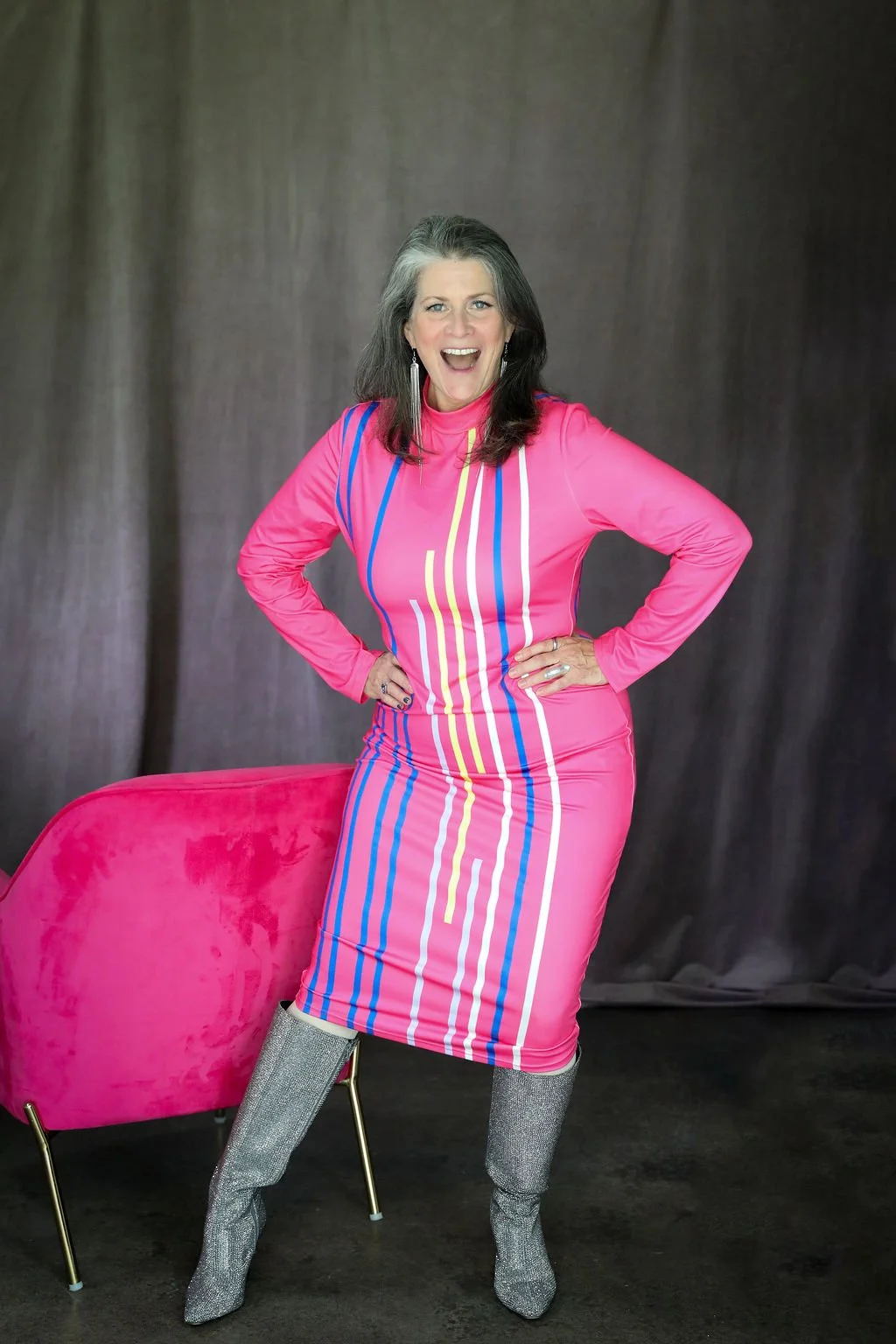
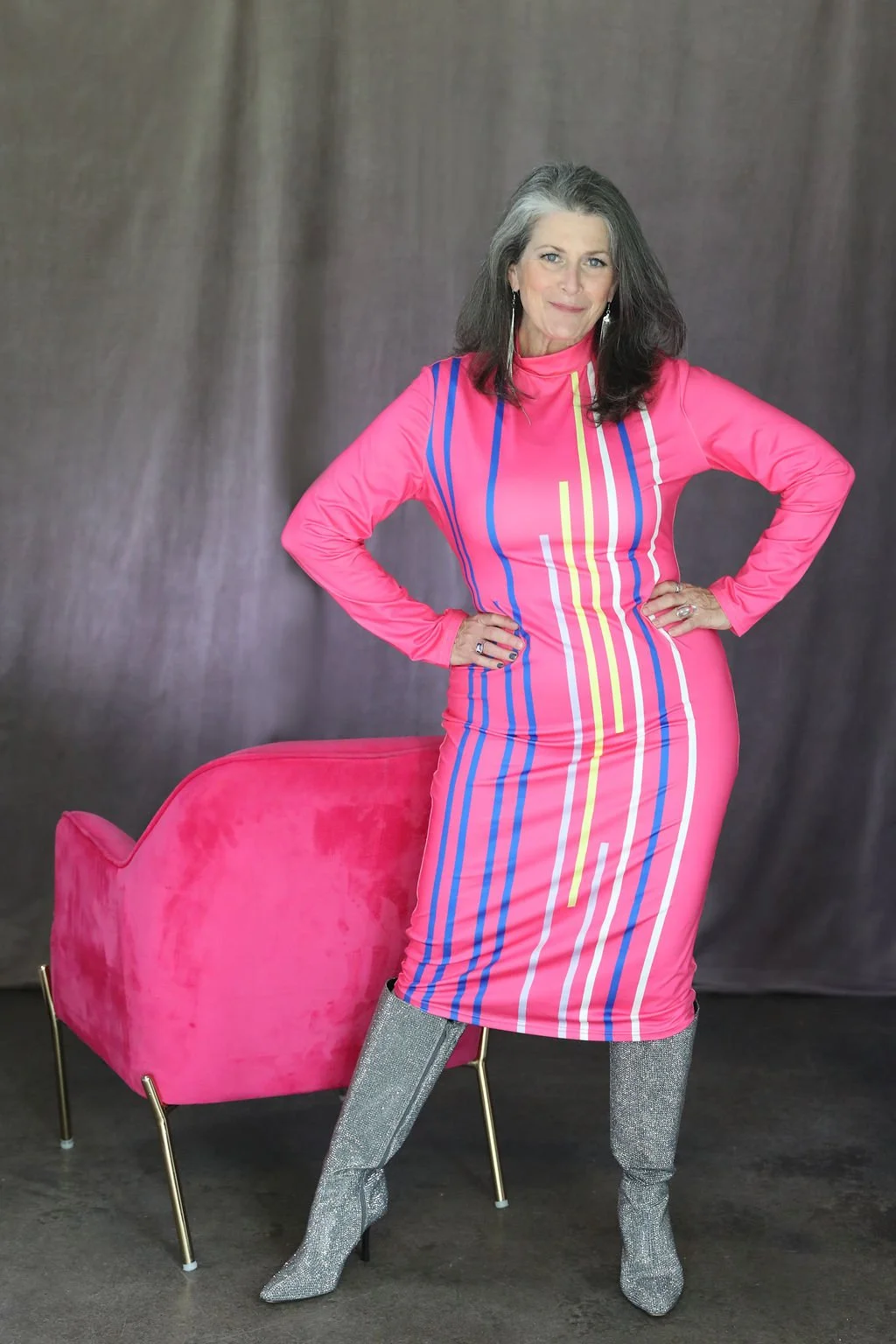
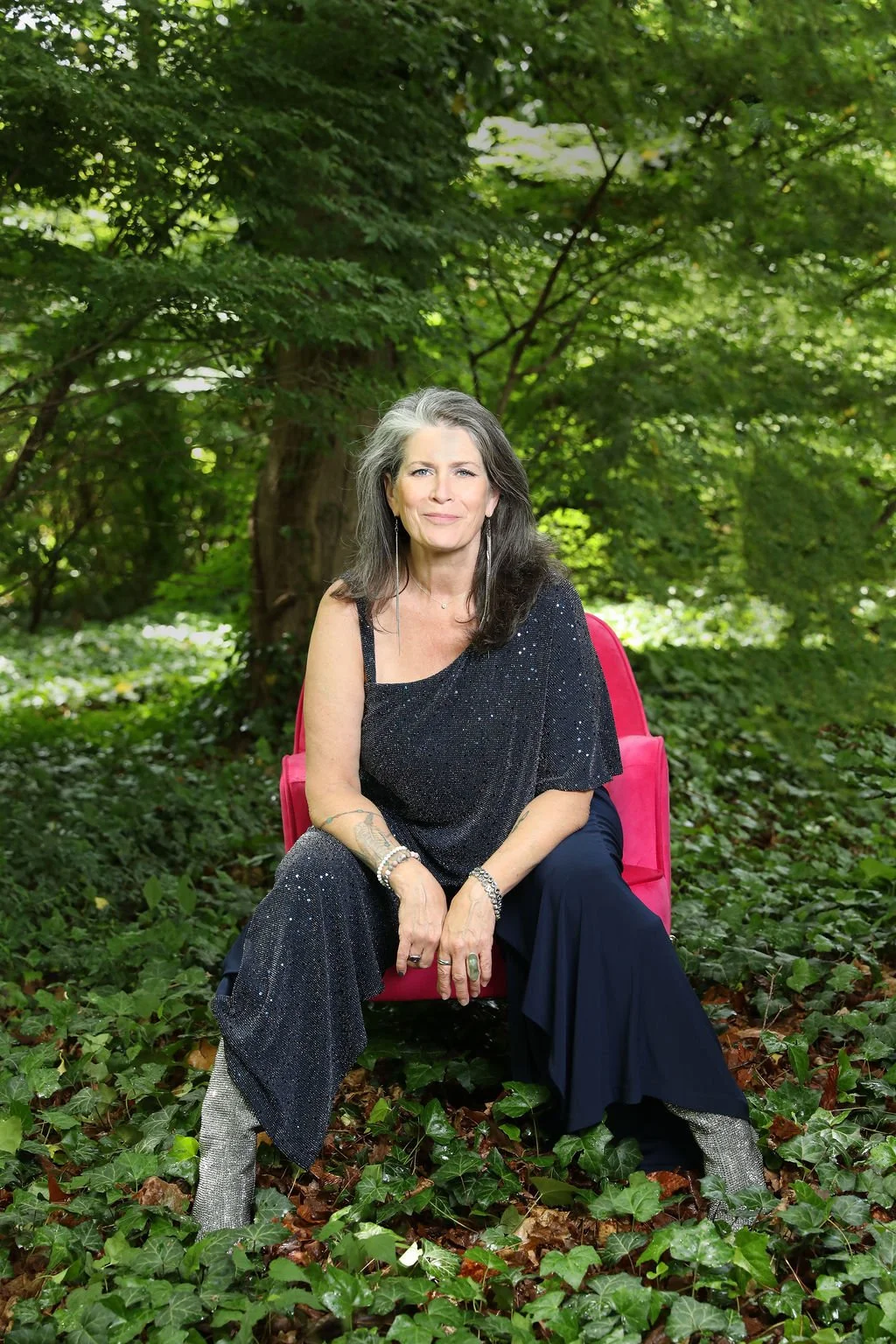
Photos: Stephanie C. Olsen
Her Mission: Creating brand content that doesn’t talk at us, but with us, and represents us all.
Editor’s note: Kristie Raymond knows talent, she knows influence, and she knows how creative minds work when they tell us a story about their brand. It may seem counterintuitive, but authenticity in images, videos, print ads, commercials, reels, and social media takes a team. Kristie recognized that authenticity continually excluded the very real and present disability community. Our conversation starts here:
What strikes me about your work is how you’re challenging the industry, and that seems so enormous to me.
It is enormous. We are mainly asking people who are able-bodied, because those are the people who are in the creative rooms, who are the creative directors, art directors, and producers—we’re asking them to think outside of themselves, which is a really hard thing to do, for anybody.
But in the creative space, I’m challenging those individuals to be creative and come up with unique approaches and perspectives every time. I’m sort of saying, “Hey, let’s extend that a little further. Let’s widen that lens just a little bit more. And in so much as you’ve got this great concept, how do we really sort of truly reflect the landscape of humankind in that creative brief and decision?” Where does it fit and how does it look? And I think it also has to do with valuing the disability community and seeing who they are as a customer or as a consumer base for any product or service or brand.
Switch out the word “disability” with “young” people and “older” generations. What is it that took so long, do you think, for brands to recognize?
I think there’s a lot of education that’s involved here and again, there’s a lot of presuppositions and judgments made about individuals—just perhaps how people look. Everybody does it. People do it to everybody all the time. As able-bodied people, we’re making presuppositions about people’s abilities based on how we see them present themselves. What we are trying to say is, look a little beyond that.
As much as we want to say, “Great, we’re having these discussions,” it’s still less than 2% of any advertising, any mainstream representative from the disability community. And yet the disability community is over 24% of our population. And I think brands and businesses can better understand that population, spend time understanding their value, and see what that community can bring to their business. It’s a big conversation.
When we talk about it, we certainly talk about the impact it can have on their bottom line for dollars and cents in sales, but we also talk about the impact that it has as a company that is seen for seeing people. If you’re making an effort, it will be known. It will, I think, benefit one’s reputation. “I can see them being in this bowling alley advertisement,” right? Because young teens with disabilities want the same things that able-bodied people want. We’re all human, and we get down to that nugget of we are all human, and different vessels of bodies, and different ways that our bodies move around. I think the disability community has been screaming and jumping up and down and trying to get attention for so long. For me [as someone in the industry] to say, “I see you, but I’m expecting you to come to me,” That’s rude. I mean, that’s just uneducated. Am I just going to sit here and wait for all these people with disabilities to come to me and be part of my modeling agency? No! I’m going to go where you are because you’ve never been invited, and you’ve never had opportunities presented to you that are really real. So, when I go out, I go to the yearly meetings for The Arc, I go to the Massachusetts Down Syndrome Conference, and I say, “I’m here for you. I want to create this talent pool that represents you.” Without a talent pool, we will never have inclusive casting and production. As I talk about inclusive casting, I get a lot of clients who are really ready to be on board. The problem is there’s no talent pool, right? So therein lies the circle that we’re trying to close. And by doing our photo clinics called Beauty Has No Limits!, and providing that low-cost opportunity to get photos that could be matched up against any traditional model being presented for work. To me, that is how we build it. We use the same standards and expectations. Each person is unique and different. So I think that by providing the opportunity, you sort of turn on the light of interest and then can represent these individuals for real work. The ultimate goal is to build a talent pool of the same size as a traditional talent pool. A modeling agency may have 200 or 300 people on its roster, and I’m excited to say I have over 40, but I’d like to see those numbers go up. The spectrum of disabilities is pretty big, as well as the ages at which we see these disabilities.
You have your work cut out for you. It seems to me that you become part of the business model of clients’ brands, as well as an advocate and agent for the models you have. You’re wearing a lot of hats. What’s the story behind the beginnings of You Are Humankind?
I was working with the Hasbro toy company. I went internal there as a photo producer in 2015. I think one of the reasons they brought me on was that I had been a freelance vendor doing casting for them under my production company, Viewfinder Productions. But the fact is, all the brands are working in silos, right? All the little teams are basically picking the same kids. They’re picking the same children on the boxes. So if you had a product that was talking to girls ages 7 to 10, I’m seeing the same girls over and over across brands. I don’t think diversity was really part of the conversation, but its absence was extremely visible. When you step back, and you’re looking at it from the photo studio perspective, we’re like, “Oh, we just saw this kid last week for another client, another brand.” You lose that real grasp of identity when it comes to your brand. I’ve worked alongside a brand, Baby Alive, that really embraces all abilities. And it was there that I connected with an organization that supported representation in the media, and we did a photoshoot. A model that we do now is a photo clinic and video clinic, and we brought in individuals, children with disabilities, from around the community here in New England. And Hasbro hosted a huge clinic for two days. And it was amazing. And, you know, the kiddos get to walk the runway, the red carpet, and get photos and video to take home. It was really a great experience. More than that, though, was that the brand picked children to book for print and video and a commercial, and they really stood by it. They used a young girl who’s in a wheelchair with cerebral palsy. It was so fantastic—and her response when she’s getting booked, and she sees herself on the package. And I have to be honest, when it went so well with Baby Alive, I really thought the other brands within the umbrella would jump on board.
I’ve worked for myself for so long that whenever I wanted to do something, I just did it. I don’t have to go up the chain of command—I am the chain of command. I think 2020 was a painful year and a really eye-opening year for a lot of people. During that time, I just thought, I already see the model. I already see what can happen. And I don’t want to be limited. I want to take this concept and this idea and go for it. So that’s when I left, in January of 2021, and launched HumanKind. I know the road I’m on because I’ve opened a modeling agency, a production company, and casting in the past. I’ve done it all before, so I know the job. But it’s so unique because you’re bringing in individuals who have never been a part of the industry before. I’m educating them as well.
If I’m going to send someone on a photo shoot, I want them to be informed about what to expect, what’s expected of them, and what’s going to happen. It’s pretty serious. I’m on a shoot right now and there are going to be 12 people here from a client to make the photo look right. And that’s not even counting the prop stylist, the wardrobe stylist, hair and makeup, the talent—it’s a lot that comes into play. Photos and videos hold the power to change how we see each other. I think that if we can come together in ways that provide authentic storytelling, those are the connections. I think sometimes when we see someone with a disability, we feel maybe disconnected from them, right? You may not necessarily feel that you have the same kind of connection. Maybe because they’re a little different from you. But when you see them doing the same thing in a photo or a video, you’re like, “Oh, they’re just me.” I’m looking to stir the pot and make that happen.
Community seems to be the buzzword in the last couple of years. Everybody realizes that community means more than just one little silo, as you pointed out. During the pandemic, we learned a lot about ourselves. It was a lot of microlearning, I guess, would be the best way to describe it.
Yeah, that’s a good way to put it. It’s that connection. Covid sort of pushed us all apart in so many ways. I think that here’s just a chance to reconnect. I felt very disconnected during COVID. And I think that feeling is still out there.
How is this challenge being received by brand agencies?
I definitely think everybody seems very positive when I first bring it up. Then I think it’s a matter of, “How does this fit for us? How does this fit our brand?” Is this authentic storytelling, or does it look like we’re really checking a box to make sure we’re diverse or inclusive?” I think that it’s challenging them to perhaps really be creative. Sometimes I feel the creativity is a little lackluster. Because, as I said, there’s not a single person on any of those creative teams with a disability, and to ask them to put someone in front of the camera that doesn’t necessarily look like them requires a lot of thinking. I think that’s kind of where the stage is right now.
There are definitely some clients who are all over it. Staples. We do a ton of work with them, especially a lot of their B2B, they do an amazing series of photo shoots. One of the shots was at a school. So, of course, we had a group of kids in front of the teacher, and we were able to authentically be inclusive there because many classrooms today are fully equipped. We don’t have separate classrooms. If it’s not real, if it’s an inauthentic representation of that community, you will know it, and then the backlash will begin. Bad stock photography always pops up in my algorithm a lot. Unfortunately, somebody might be trying to be inclusive and really represent the disability community, but if they go to a stock house and aren’t educated, they’re just going to pick a random image, and those images aren't vetted as real. Is this how a person in a wheelchair would approach the situation? Typically, they are able-bodied people in wheelchairs in this stock photograph. And that unfortunately continues the misrepresentation of what people who are disabled look like. There are nuances and subtle innuendos that come into play, causing the massive production monster. I feel that you are better off when you stop for a moment and perhaps think things through. This industry runs at 150 miles an hour; we rarely stop. Take a breath, sit with it, and find those places. I go and put myself in places where the disability community is, because I want them to see that I am there for them. I want to be in the rooms and at the places where those creatives are, and be conscientious about my posts, what we’re saying on our social media, and how we’re trying to educate. I think there is some fear from less able-bodied folks. “What if I do it wrong and right?” But the fact is, everyone that I’ve met and spoken to, I have to ask, in a very humble way, “I’m hoping that you might be able to guide me so that my actions can be reflective of the right approach.” That’s important—I don’t want to speak for them.
Right, as you said, it’s not for them or at them, it’s with them. Passing the mic when you can. What you’re doing is wonderful. But I’m sad that something that should be normal at this po’t.
Oh, it should be normal. It should have been done a long time ago. But as a society, things are moving along. I love it when clients are inclusive and ready to be so. But I also really feel and see confidence skyrocketing in the disability community, from the individuals that are coming through our program and our clinics and participating in our photo shoots and our fashion shows. Some people are seeing themselves as beautiful for the first time. And that’s powerful. It’s a powerful feeling.
Visit www.youarehumankind.com