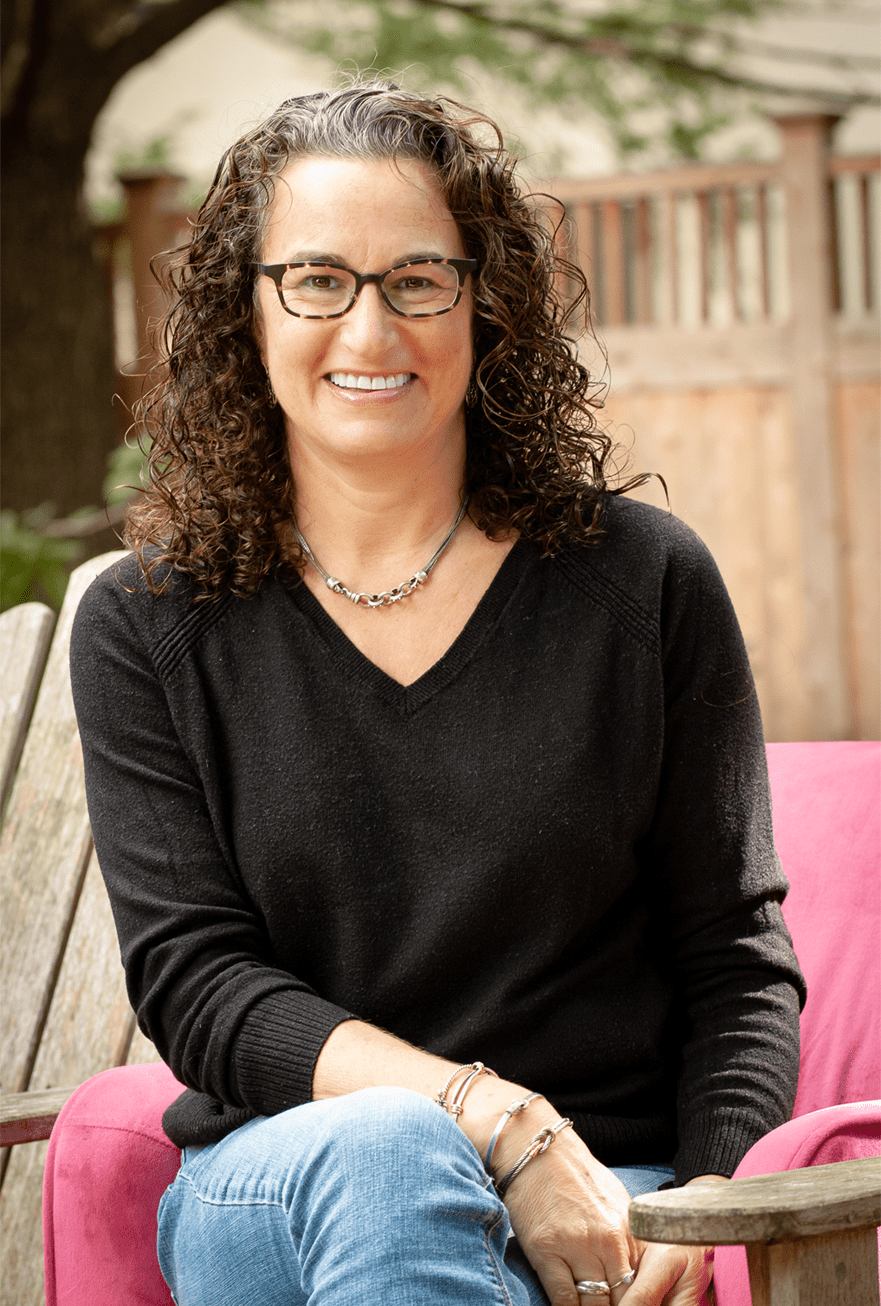
Kathy Picard Will Not Be Silent
Trigger warning: This story contains discussion of child sexual assault. Please take care while reading.
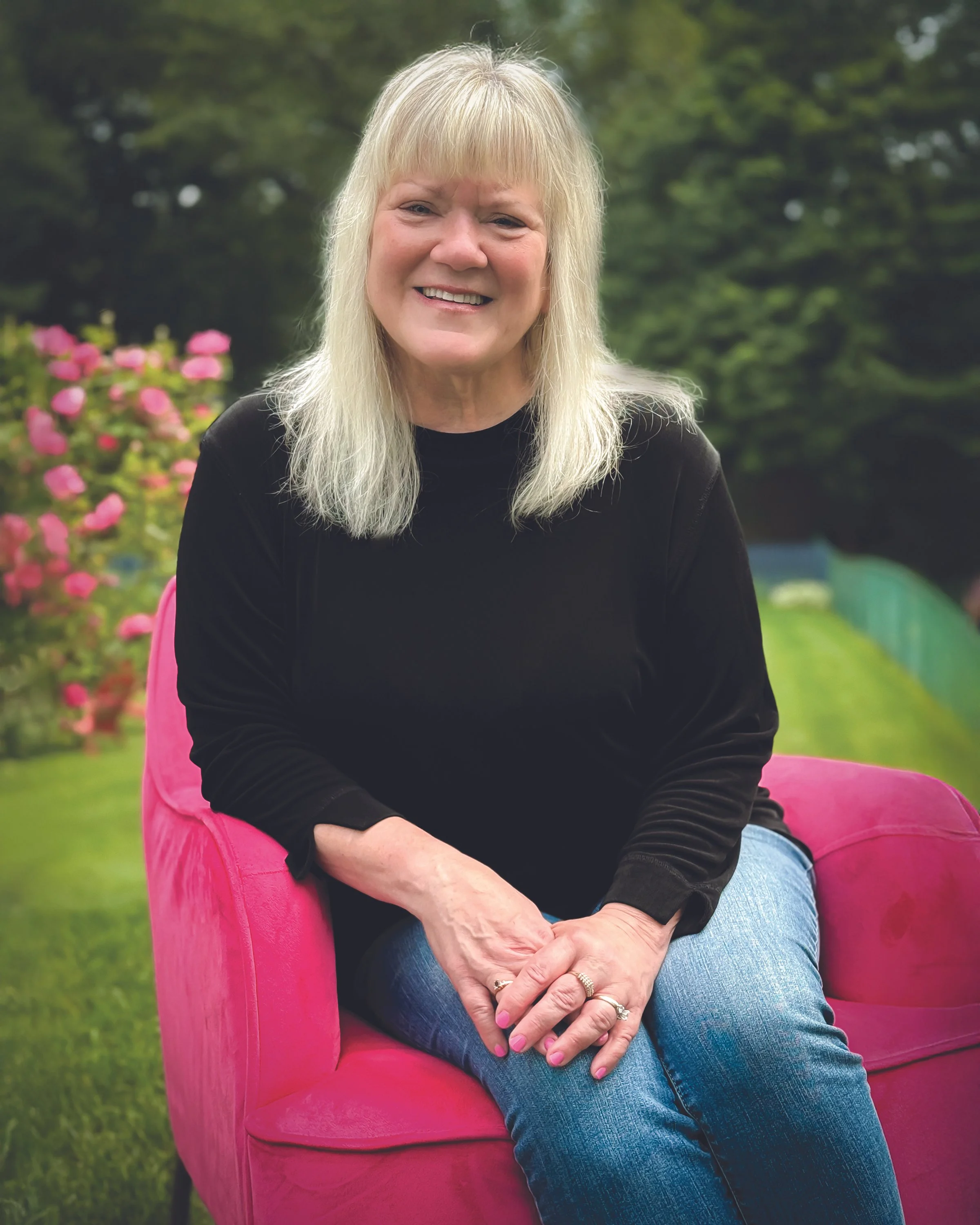
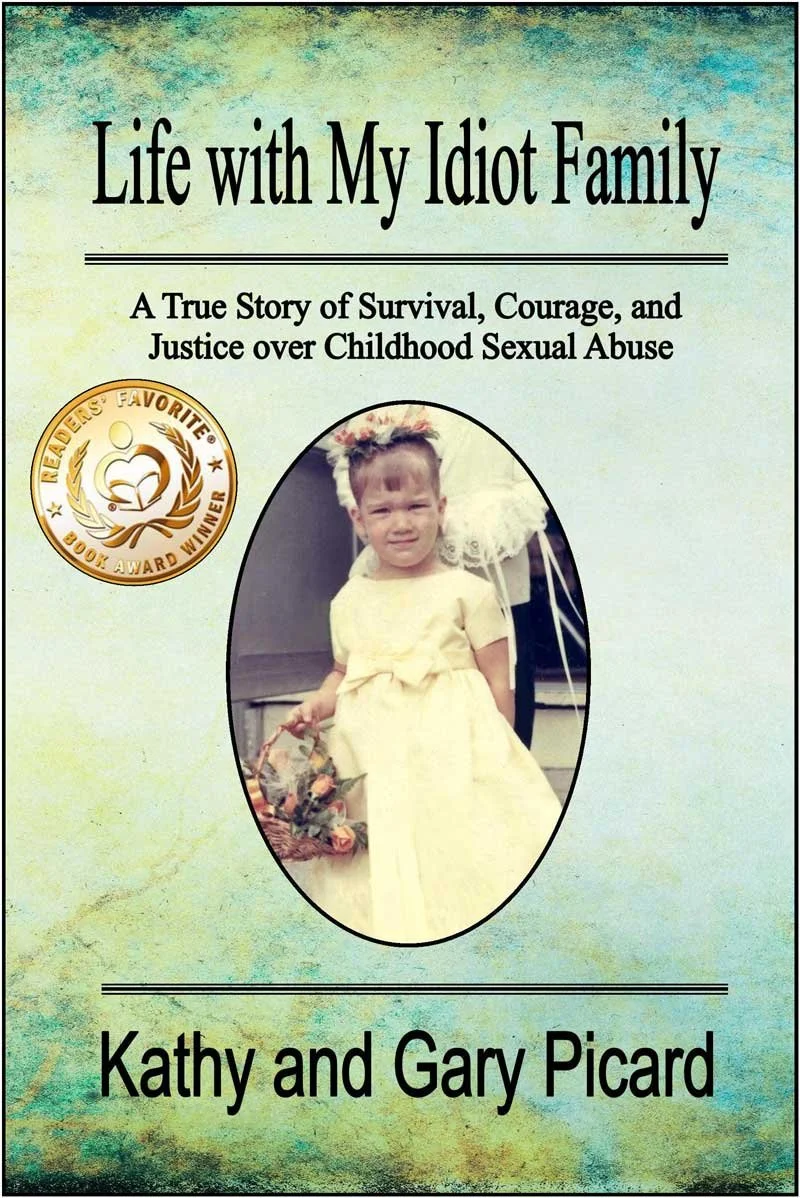
At 28 years old, Kathy Picard finally began to talk about the sexual abuse she had kept secret since age seven. But the betrayal she exposed, followed by the bravery she found to tell the truth, was met with “it’s too late to do anything” and more dismissive legalese. In full fight mode, this survivor was not going back into silence. Kathy learned advocacy on the ground, on the phone, with her pen, her voice, and her story.
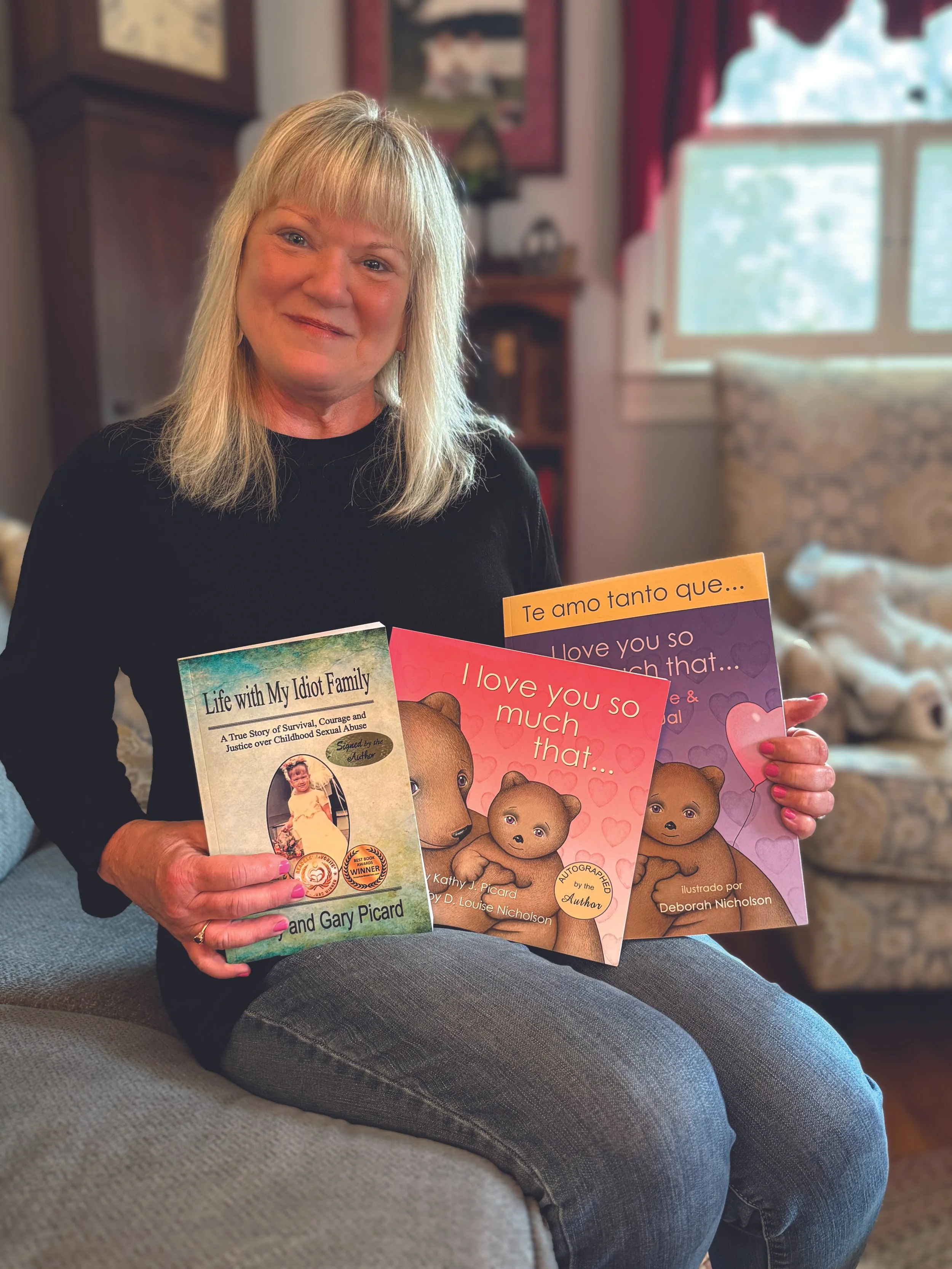
She helped change the statute of limitations so that she and others can find some semblance of justice. Today, Kathy’s advocacy has been recognized and awarded by local, state, and federal governments, as well as international agencies. Her memoir, “My Life with My Idiot Family,” and her children’s book,” I love you so much that…” are resources for parents and community leaders.
Our conversation begins here:
Tell me about being a survivor-turned-advocate.
Yes. I’ve been talking about this for about 23 years now, and I am not alone. I share my story not only to help myself, but to help others, letting them know that it’s okay to tell. It’s not their fault. You can get through it, possibly, but you have to get rid of that ugliness in your stomach, and you have to talk about it.
Statistics show that one in every four girls will experience sexual abuse before their 18th birthday, and one in every six boys before their 18th birthday. I think there are more because a lot of it goes unreported. And 93% know their abuser. It’s not a stranger. And shame on the people who don’t want to listen. As survivors, we need to find only those in our circle who believe us, who trust us, who want to help us. There are a lot of ignorant, stubborn people out there who would say, “My child would tell me.” That’s not always the case. Maybe the abuser is in their home, or they don’t want to get punished, or they don’t want to get hit for telling. So many wait until they’re older and out of the home to tell. Then they can talk about it. But sometimes they never tell their story, never let it go. Because, “Why talk about it now? It happened a long time ago.” Or, “It only happened once.” But that trauma stays with you.
Did people tell you not to talk about it, keep it a secret?
I told my grandmother when I was nine years old, but she was so afraid of my abuser that she told me to keep quiet and not talk about “stuff like that.” Then, at age 28, I did talk to my Aunt Judi, but she was also afraid of my abuser and told me not to talk about it, and that she would take care of it.
Were you able to press charges against your abuser? Did the state?
Back when I started my advocacy work in 2002, the statute of limitations had expired in Massachusetts. So, I didn’t have any legal recourse at the time. So I called 1-800-Dial-A-Lawyer to get legal advice from an attorney. The attorney told me the statute of limitations had expired, so there’s nothing I could do about it. Just to verify, I called back and spoke to another attorney who told me the same thing.
I didn’t know what else to do, so I called my representatives and senators at the State House in Boston. I was trying to explain to these people that I was sexually abused as a child and was thinking of suing my abuser. I didn’t understand how there could be a time frame on something like this. During one of these phone calls, I was told that at any given time, there are over 6,000 bills filed, and that changing the statute of limitations was not one of them. Then this particular aide told me to stop calling because I was bothering him. I was pissed. And I told him. “You need to do something about it, do your job, I’m a taxpayer,” I told him. The time frame for a sexual abuse survivor to sue their abuser needs to be either eliminated or extended. That’s pretty much when my advocacy work started.
There are criminal and civil cases. Usually, criminal cases mean jail time and registering as a sex offender. The people I was working with helped to change the statute of limitations on criminal cases, and on September 21, 2006, we changed the law, which allowed people up to the age of 43 to sue their abuser in court. But I was older than 43 so this new law didn’t apply to me. That’s when I started fighting to change the statute of limitations for civil cases. Civil cases are all about monetary compensation. We passed a new law on June 26, 2014. This new law allowed a person up to their 53rd birthday to sue their abuser in court. I had my trial on November 4, 2015.
How have you passed on your message?
I talk at schools and universities to students and staff. I’ve given talks at our policy academy, hospitals, and daycare centers. I’ve talked with men and women at correctional facilities and their staff. I talk about my experiences as a survivor of childhood sexual abuse and how those experiences have affected my life both as a child and as an adult. There are long-term effects of this kind of abuse. I have learned to deal with my PTSD.
But I also think it’s important to let them know one can still live a happy, healthy life. Counseling has helped me, and sharing my story helps me.
For a younger audience, I wrote a children’s book, “I Love You So Much That…,” in 2021, and a bilingual Spanish/English version was published in print in 2023. It’s life lessons and a resource for parents to read to their kids. And the kids love it because my dog Abby is featured in the book. She even signs the books with her paw. Life lessons like, “I love you so much that I ask you to eat your vegetables. Why should you be healthy?” And “I love you so much that I ask you to do your chores so you can see how much you can do.” But I think the important pages read… “I love you so much that… I want you to be safe so much that I don’t want you to go with or talk to people you don’t know. Why? Because a stranger could never take care of you or love you as much as I do.”
And, “I love you, and I want you to be safe so much that I want you to keep your private parts private. Why? Because private means we don’t show or share them with other people. Is there a time when it’s okay for someone to see your private parts?” Some schools —it still aggravates me—have told me, If you take this page out, we won’t allow you to come into our school and read.” I think teaching the kids safety at their level is important. I think my children’s book is a way to start.
What has been the feedback?
Most of the feedback regarding my advocacy work has been positive. As ugly as sexual abuse is, it has to be discussed in the open, and what better person to pass on the message than someone who has lived through it. It gives me legitimacy when I talk with people. They realize what I had to deal with, and it gives them hope and courage to face their own struggles and journey. They ask questions, and I give them honest answers. That is a very powerful exchange. They figure if I can do it, so can they. If I can live through what I did and come out the other side whole and positive, I think that gives them hope.
But there are people who have told me not to speak publicly about sexual abuse. That it should only be spoken about within the family, behind closed doors. In other words, stifled and ignored. Over the years I’ve tried to reach those types and I’m not sure they want to hear what I have to say.
As for the talks, I had to get my message out there. Besides my speaking engagements, I’ve written two books. An adult book which chronicles my life from childhood to the present entitled “Life with My Idiot Family” and a children’s book called “I Love You So Much That…” which offers life lessons to help kids stay safe and to know they are loved.
It’s been really good. A lot of people have bought it for baby showers. In fact, one person told me they got three of my books. I’ve read it at Lupa Zoo in Ludlow, Massachusetts, during story time. I’ve been selling a lot of the books at craft fairs as well.
I love what I do. It’s very emotional when occasions happen such as the most recent. My husband and I were at a restaurant and this little boy was there smiling at me. He said, “You came to my school. You read the book to me!” He’s seven years old and he gave me not one hug, but two hugs. I went back to this classroom before the school year ended. There were 23 kids, and they all came over and gave me a hug. I stayed for an hour. That’s what makes what I do so great.
What are you working on now?
Presenting at Stoneybrook Stabilization Treatment Center in Ludlow for the “Family Recovery” Program every last Friday of the month. Sharing my story to the men in the program. Going to craft fairs selling my books, sharing my story on various podcast. Doing anything and everywhere I can to raise awareness of childhood sexual abuse.
Working with Enough Abuse on their prevention package in Massachusetts to help pass bills into law to better protect children from sexual abuse and exploitation.
Working with Childhelp Speak Up Be Safe Program, sharing their mission of helping children to be safe.
Reaching out to more schools and daycare centers to read my children’s book and educate their staff.
Who did you work and partner with in your speaking and lobbying?
My Massachusetts Reps and senators. And Enough Abuse (formerly Massachusetts Citizens for Children). They are wonderful. They truly get it. And the Massachusetts Children’s Alliance and Childhelp.
My husband, Gary, and I wrote the book “My Life With My Idiot Family: A True Story of Survival, Courage and Justice over Childhood Sexual Abuse.” Gary did a lot of the writing and he said it was hard for him because he didn’t know the details of the abuse. We cried. We cried a lot. It took us five years to write it … I never had anybody ever in my life ask, “Are you okay?” A simple question like that to a survivor is important. My Audible Producer called up and he says, “Kathy, I have two questions for you: How do you pronounce your last name? And “Are you okay?” Nobody’s ever asked me.
I feel using “survivor” to describe you is not good enough. Advocate is powerful to me. But if you had to call yourself something, what would it be?
Sexual abuse survivor. Educational speaker. Law changer. Advocate.
All true.
A friend calls me Wonder Woman; she got me a Wonder Woman pin. The Boston Globe did a story on me and said, “We’re going to call her the bishop.” … You know, it’s not about the awards, but I have won a lot of awards that I’m proud of, and I guess that’s validating for me. People need to see, well, what did you do? Did you go to college? No. You got all these awards? Yes. I even got letters. Two letters from two presidents. I love doing what I do. But some people don't get it. They’re never going to get it. But don’t put me down or don’t welcome me into your audience. You don’t know if there are people—daycare workers, teachers, coaches who want to hear this.
The point is your message, right? And it’s an uncomfortable thing to talk about. Nobody wants to talk about it. But we have to. I am so grateful to you for all your work. I’m grateful that you felt comfortable and safe discussing all of this with me.